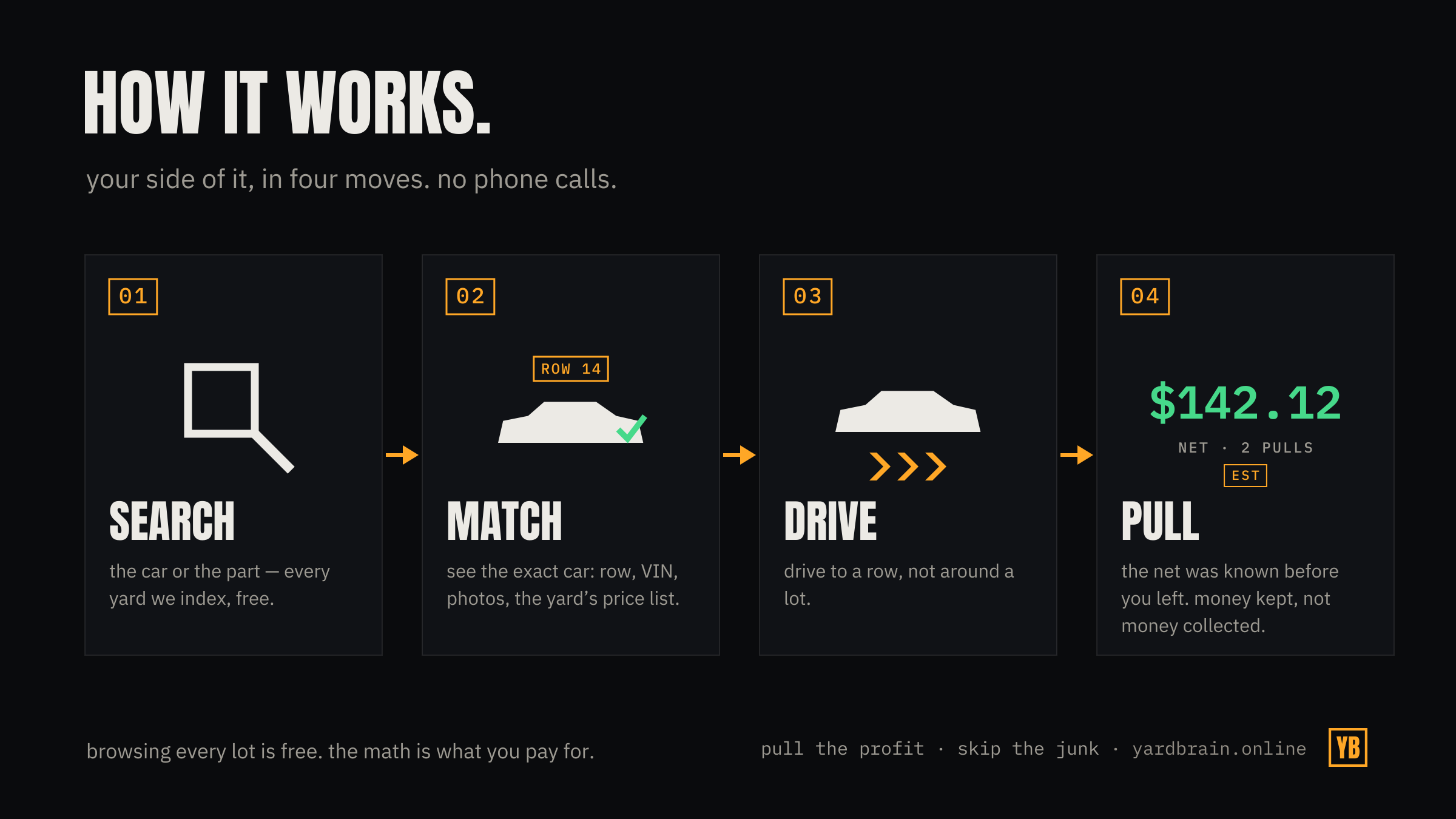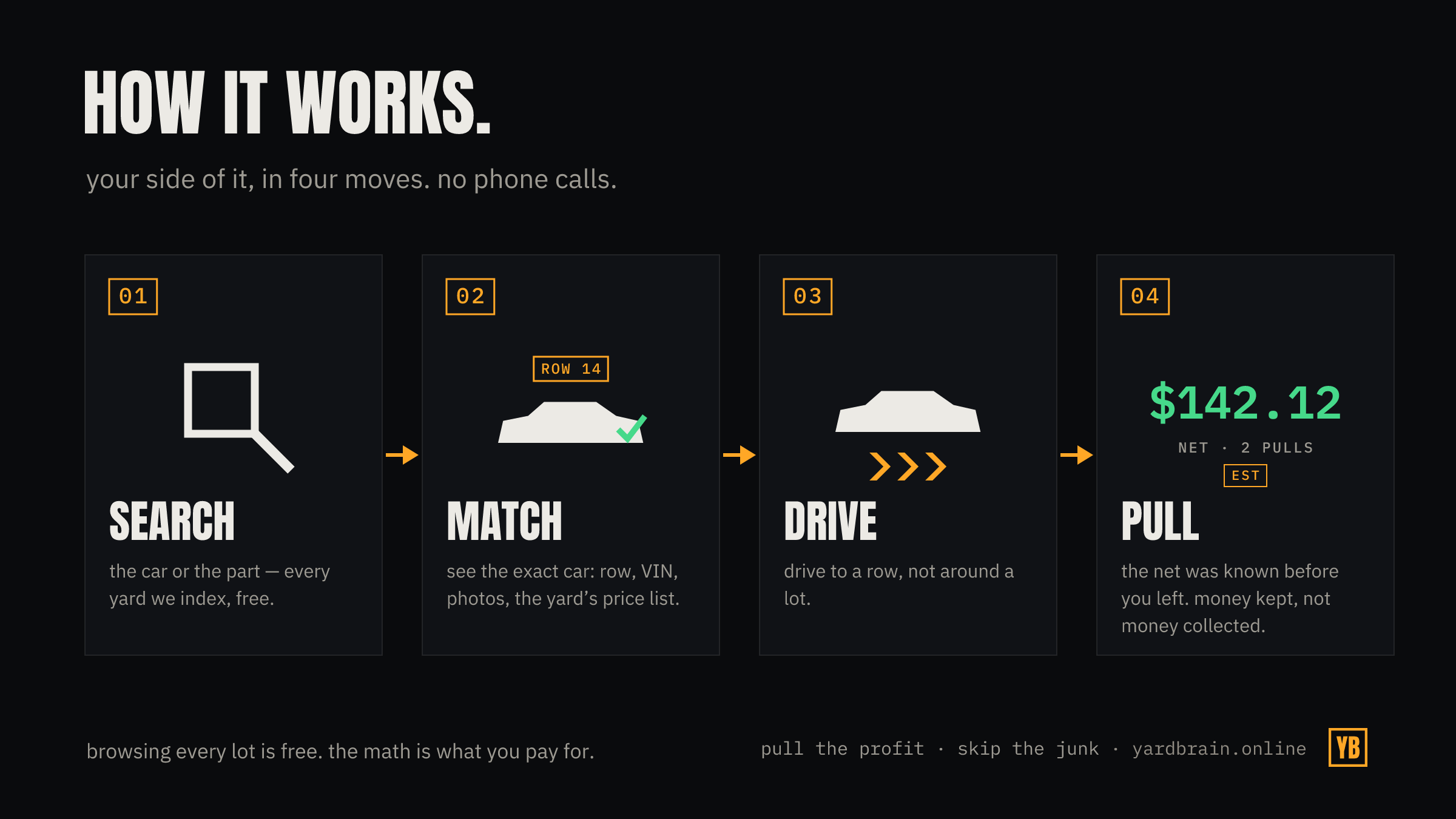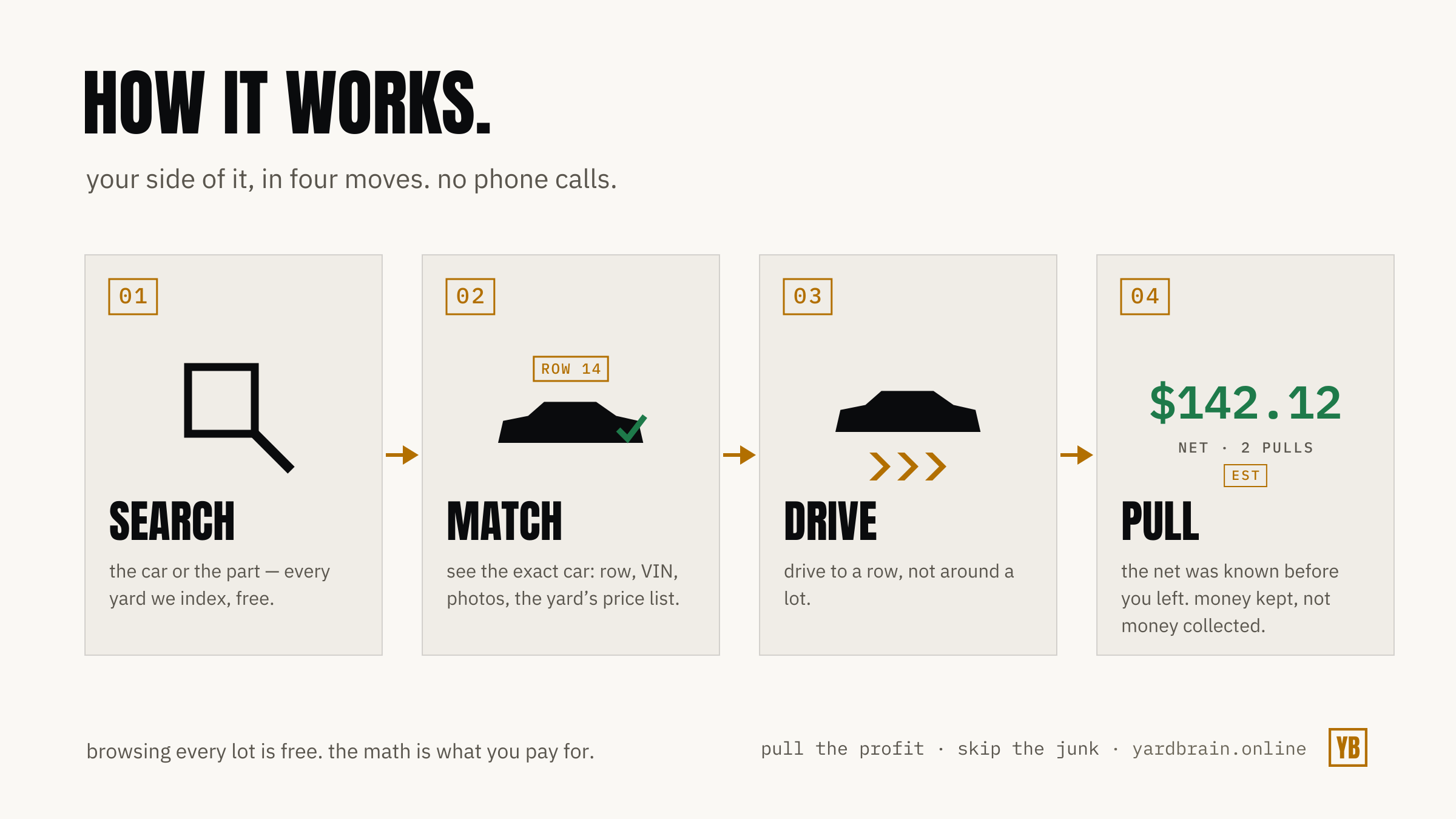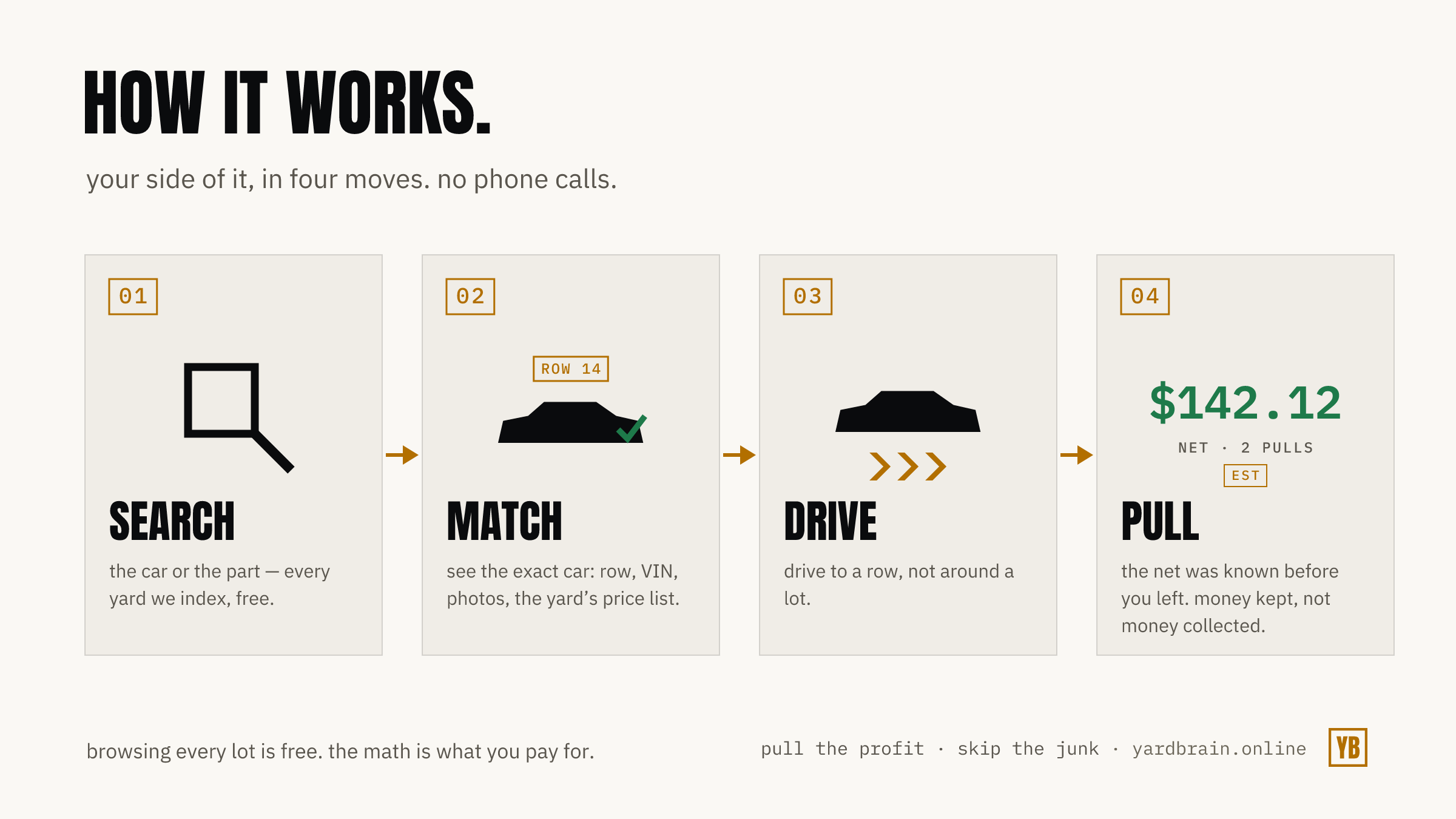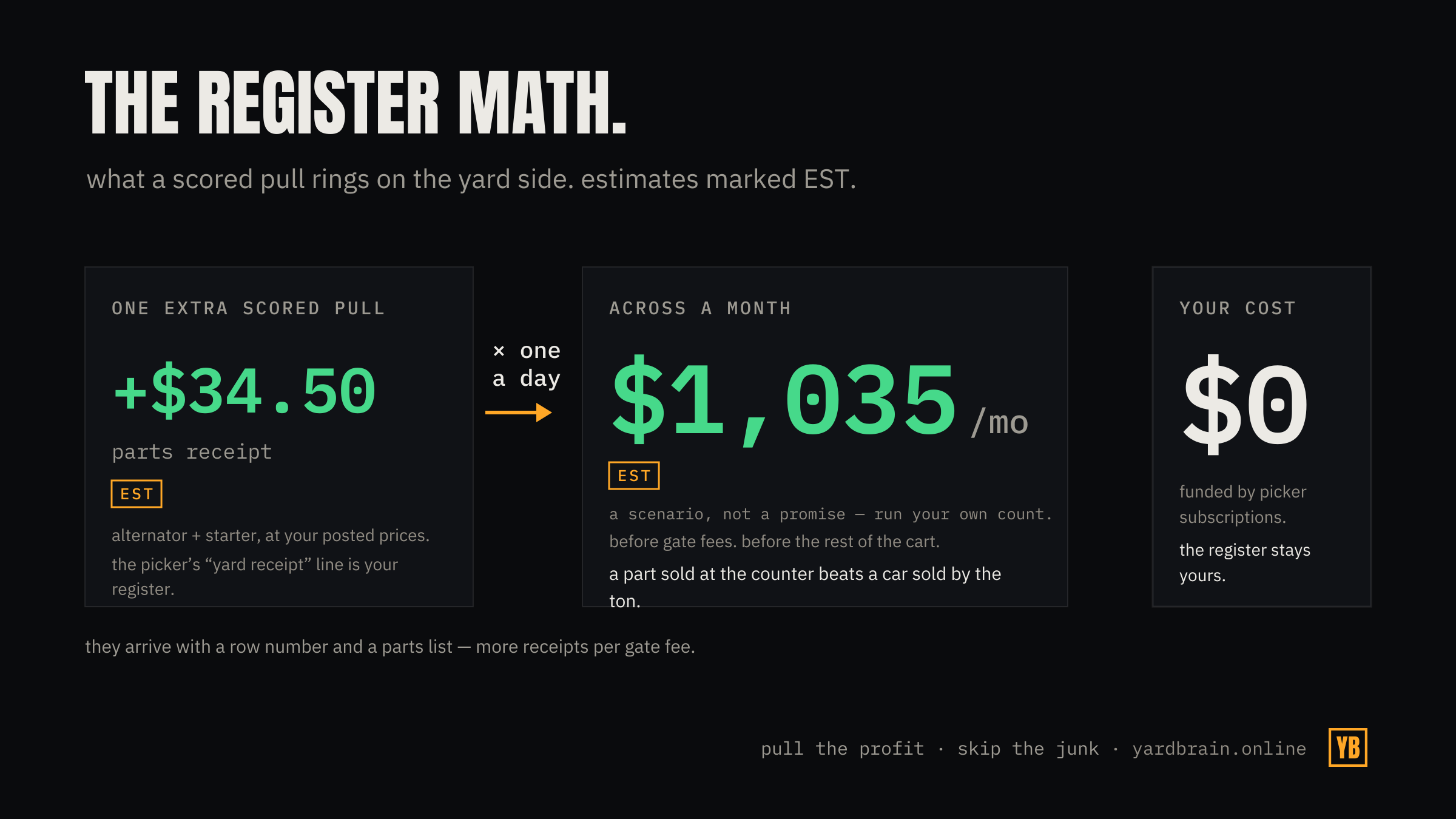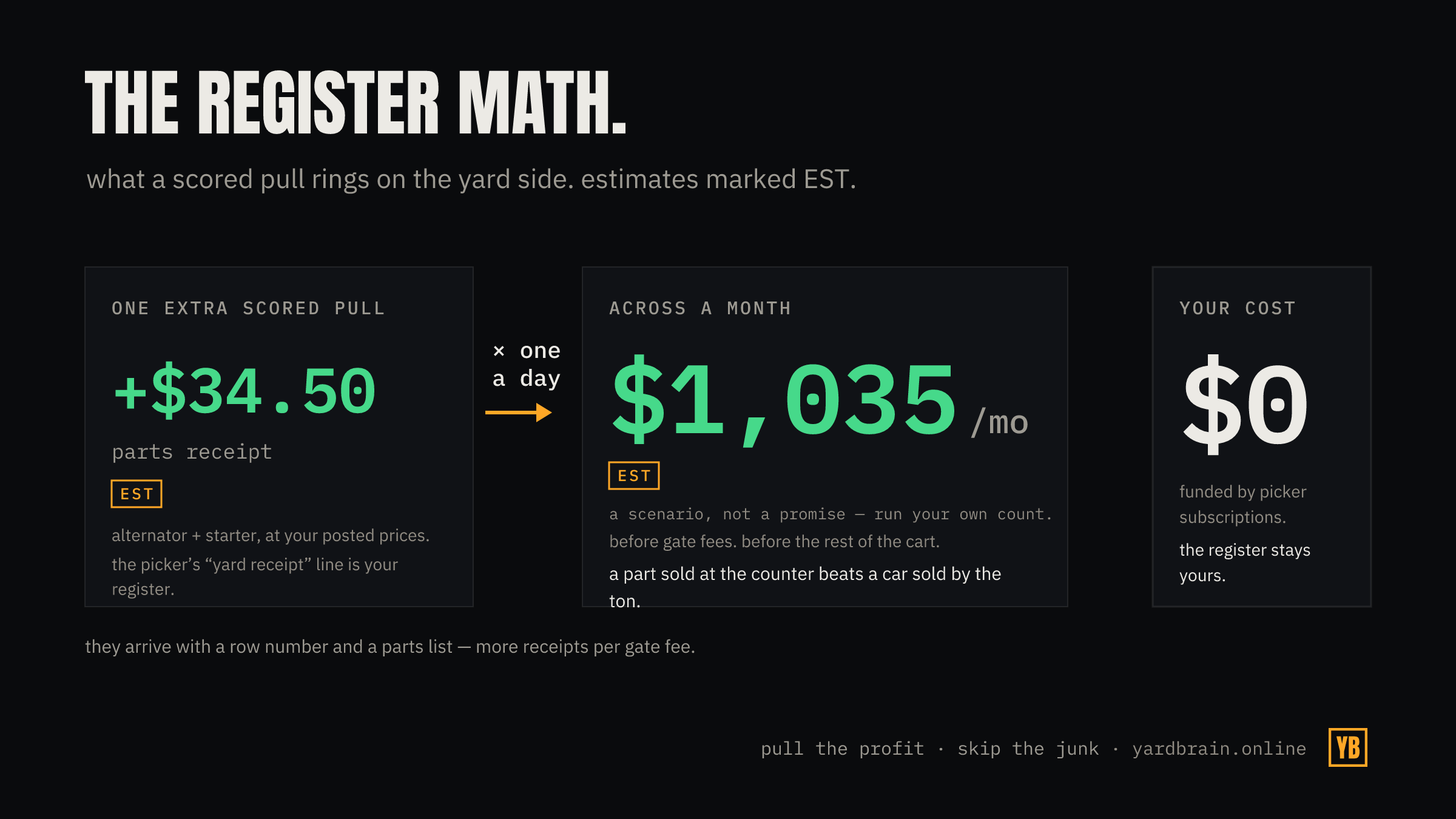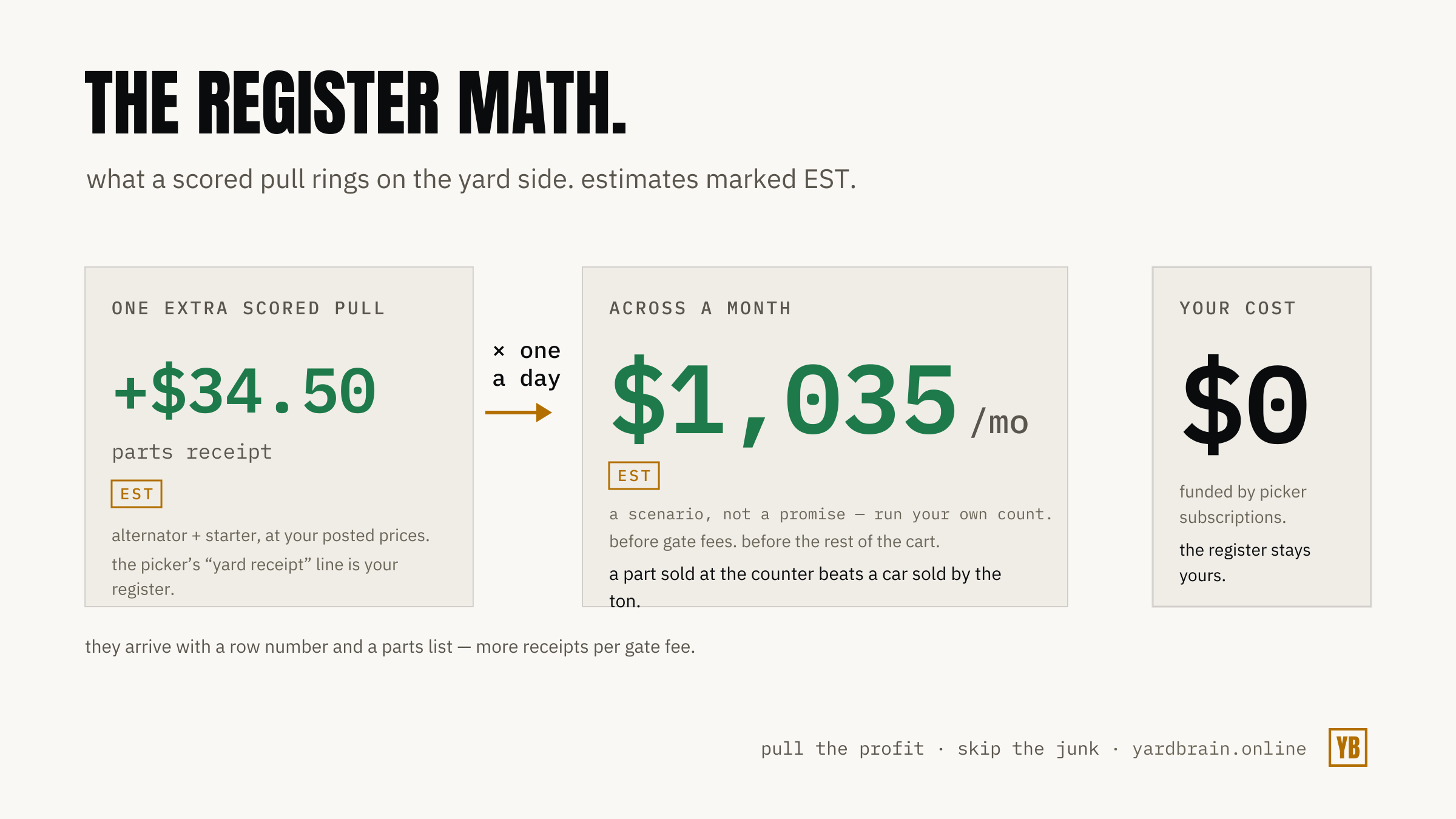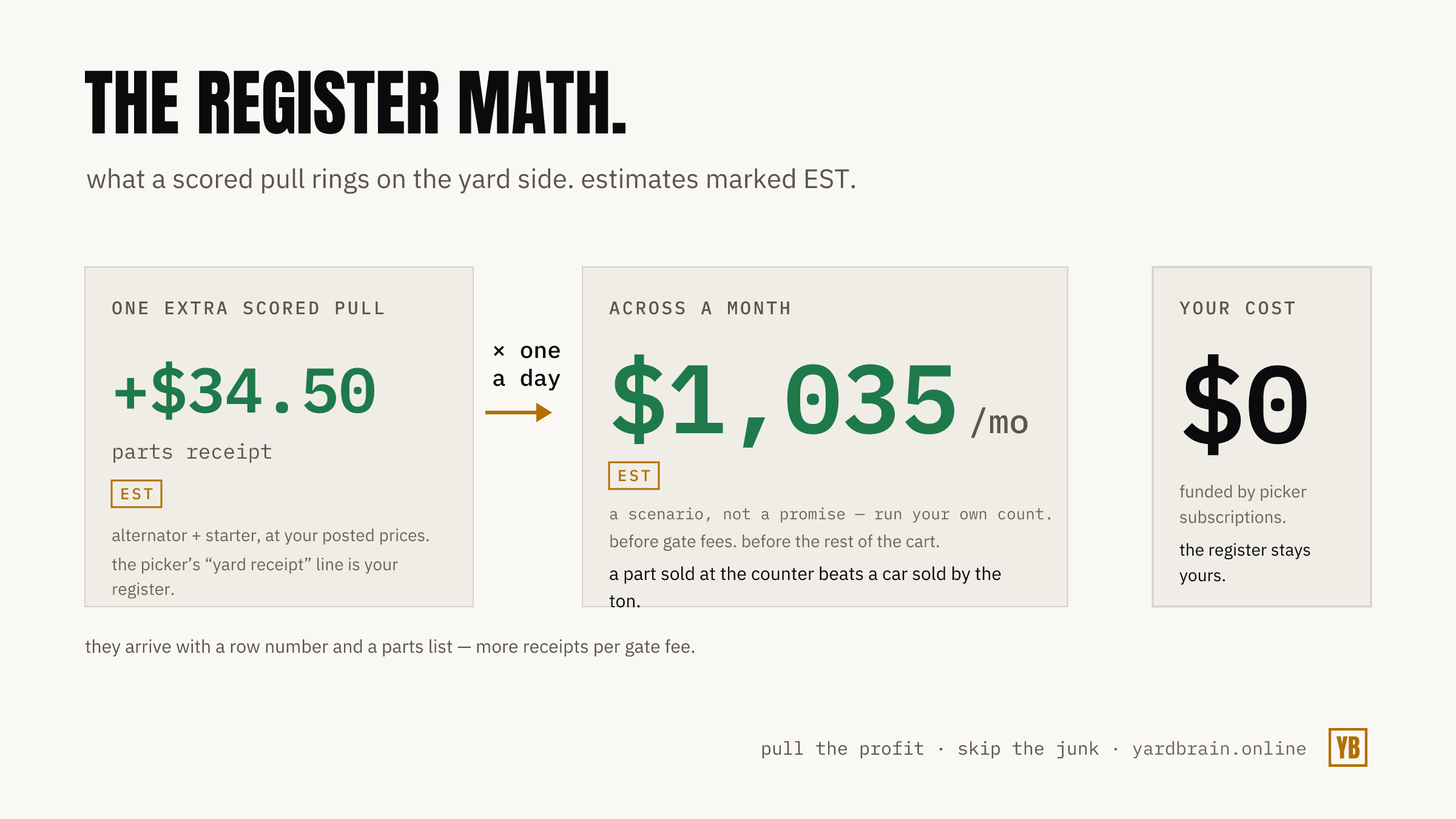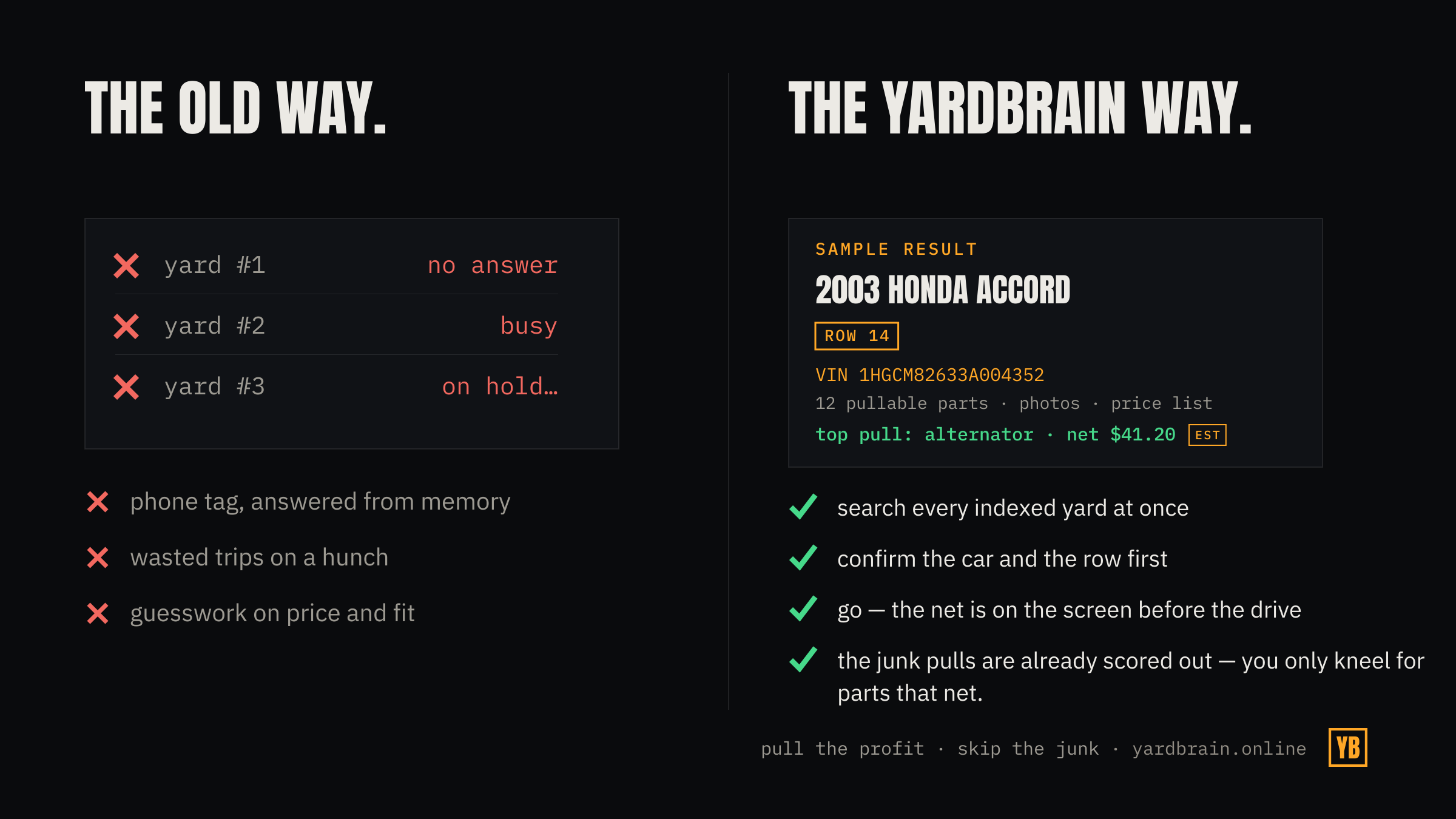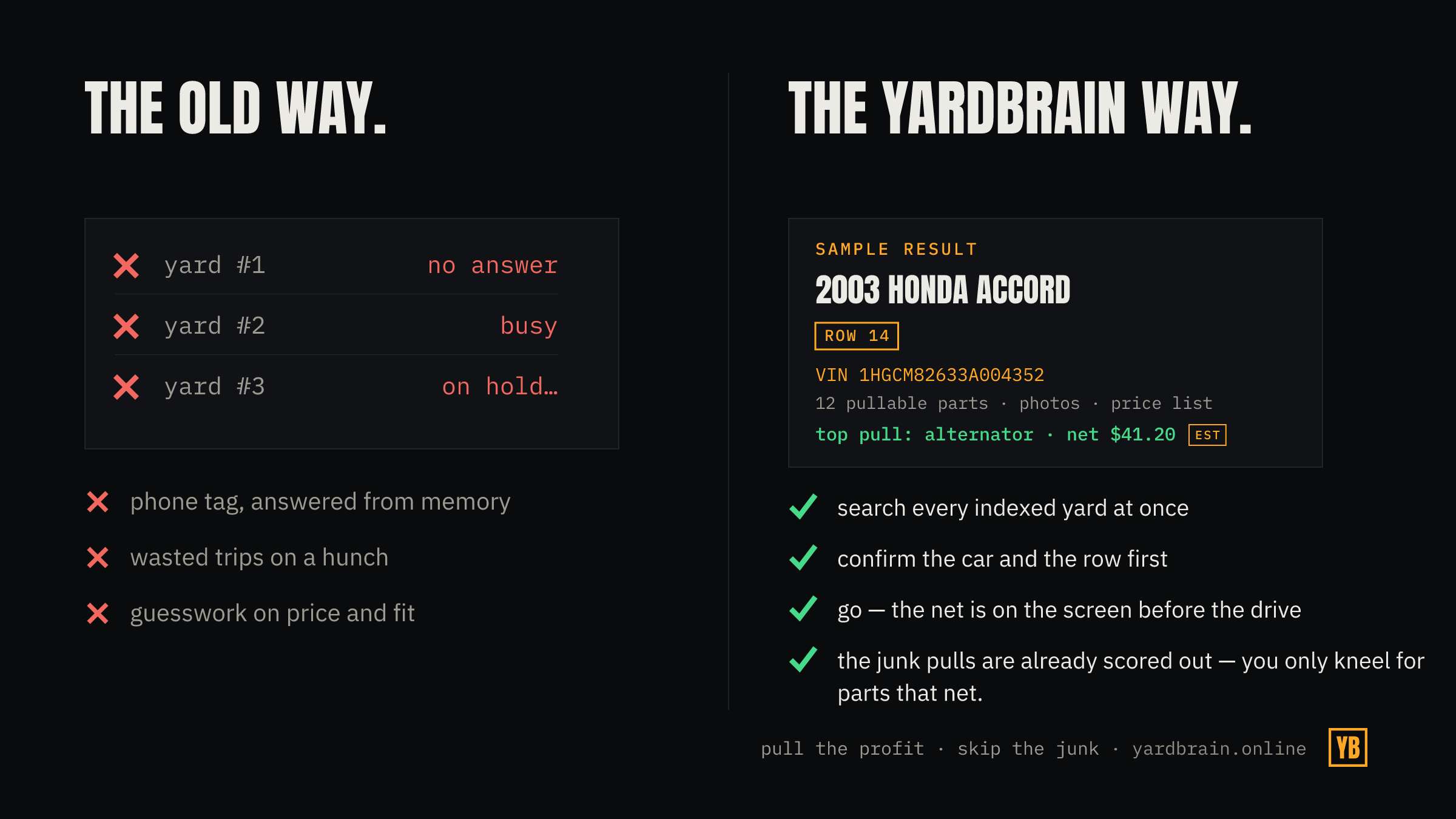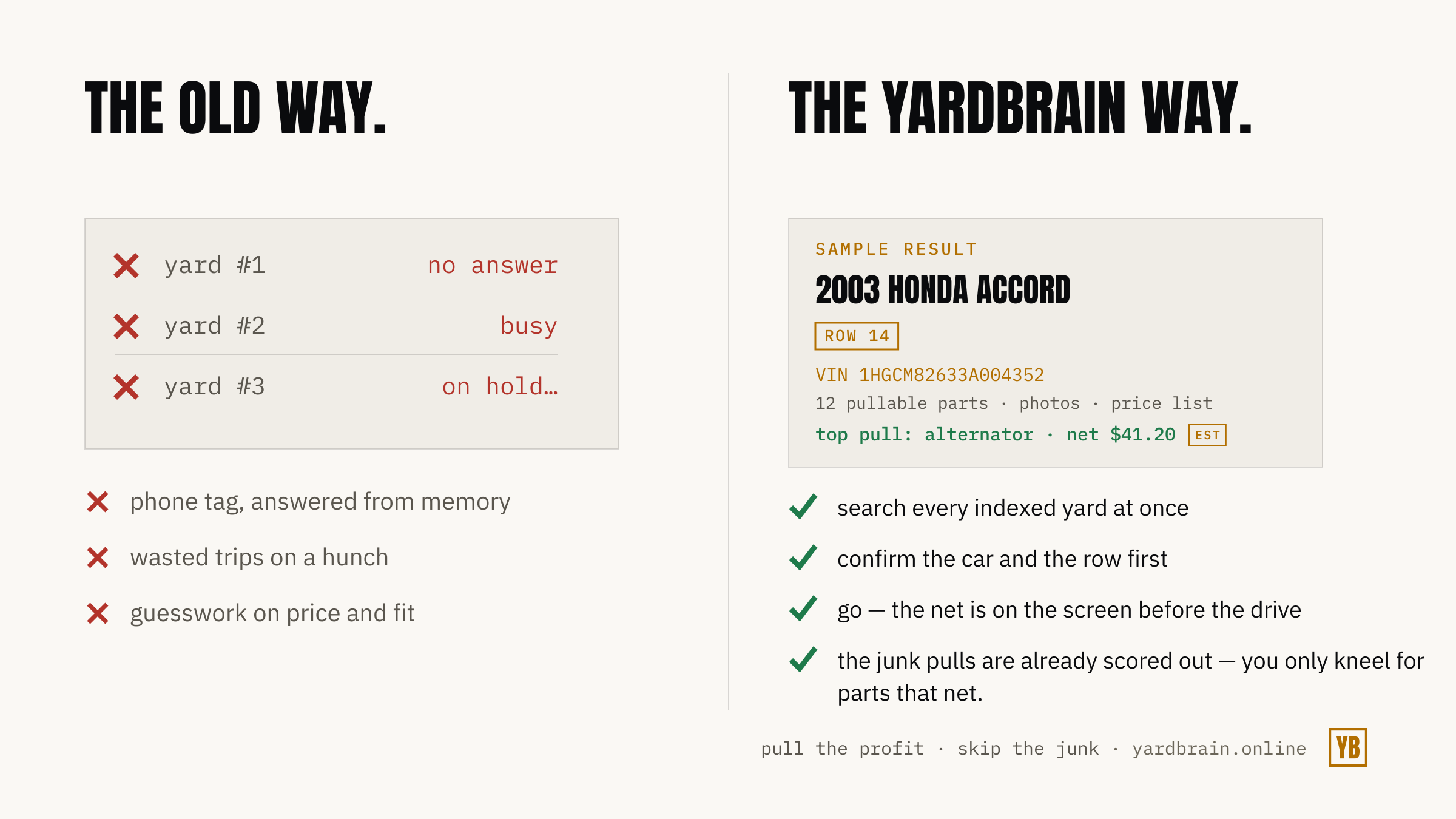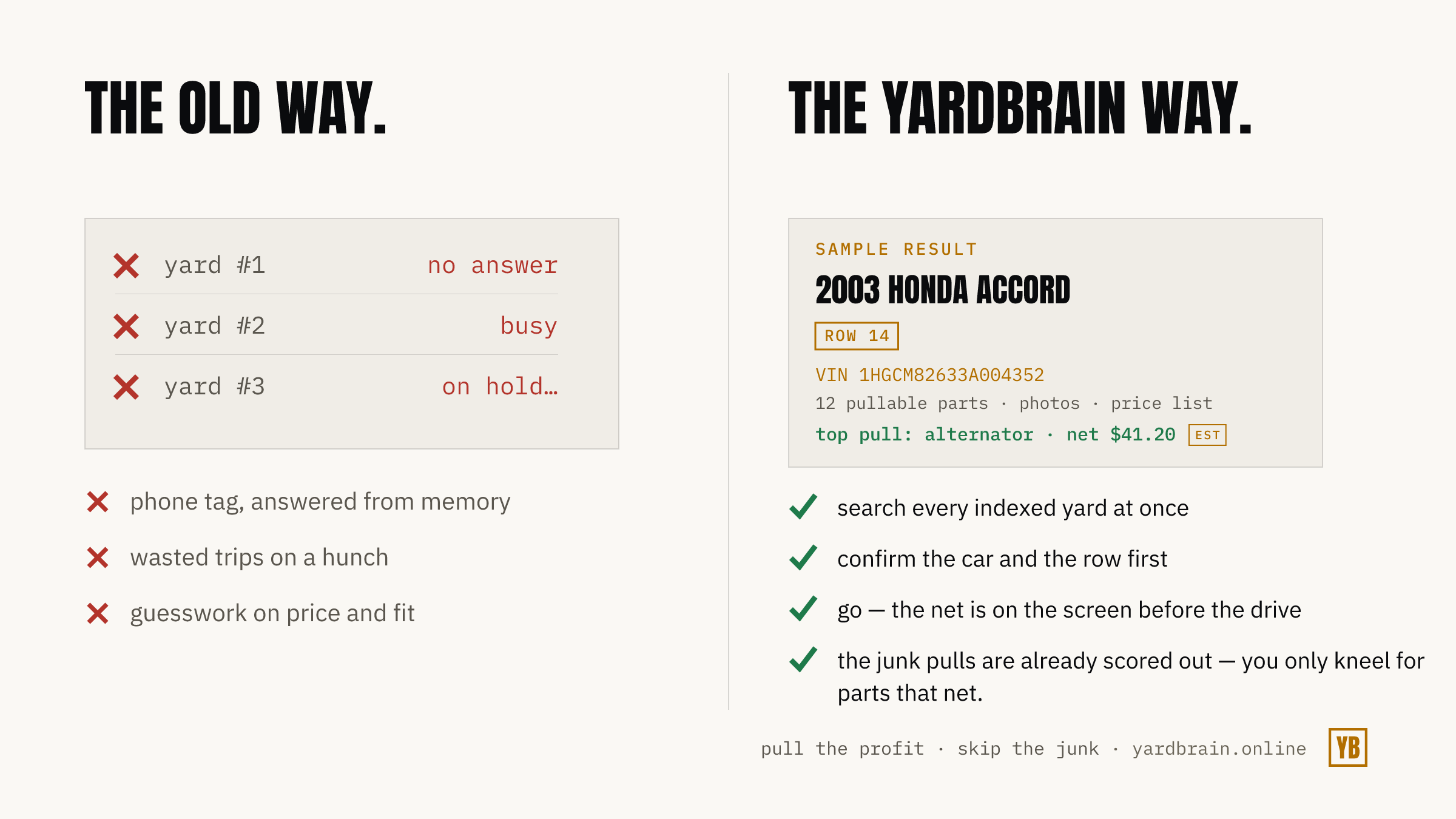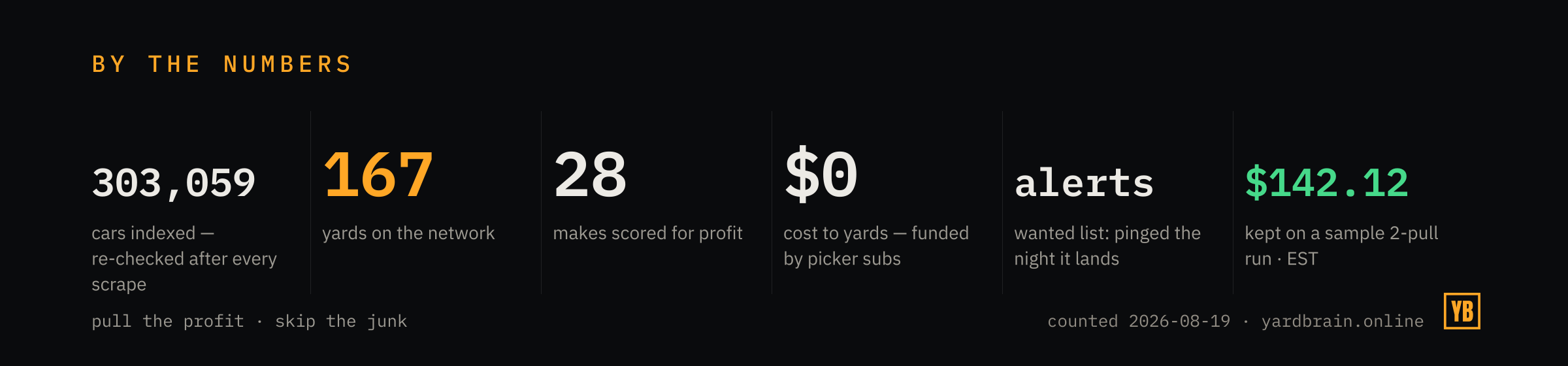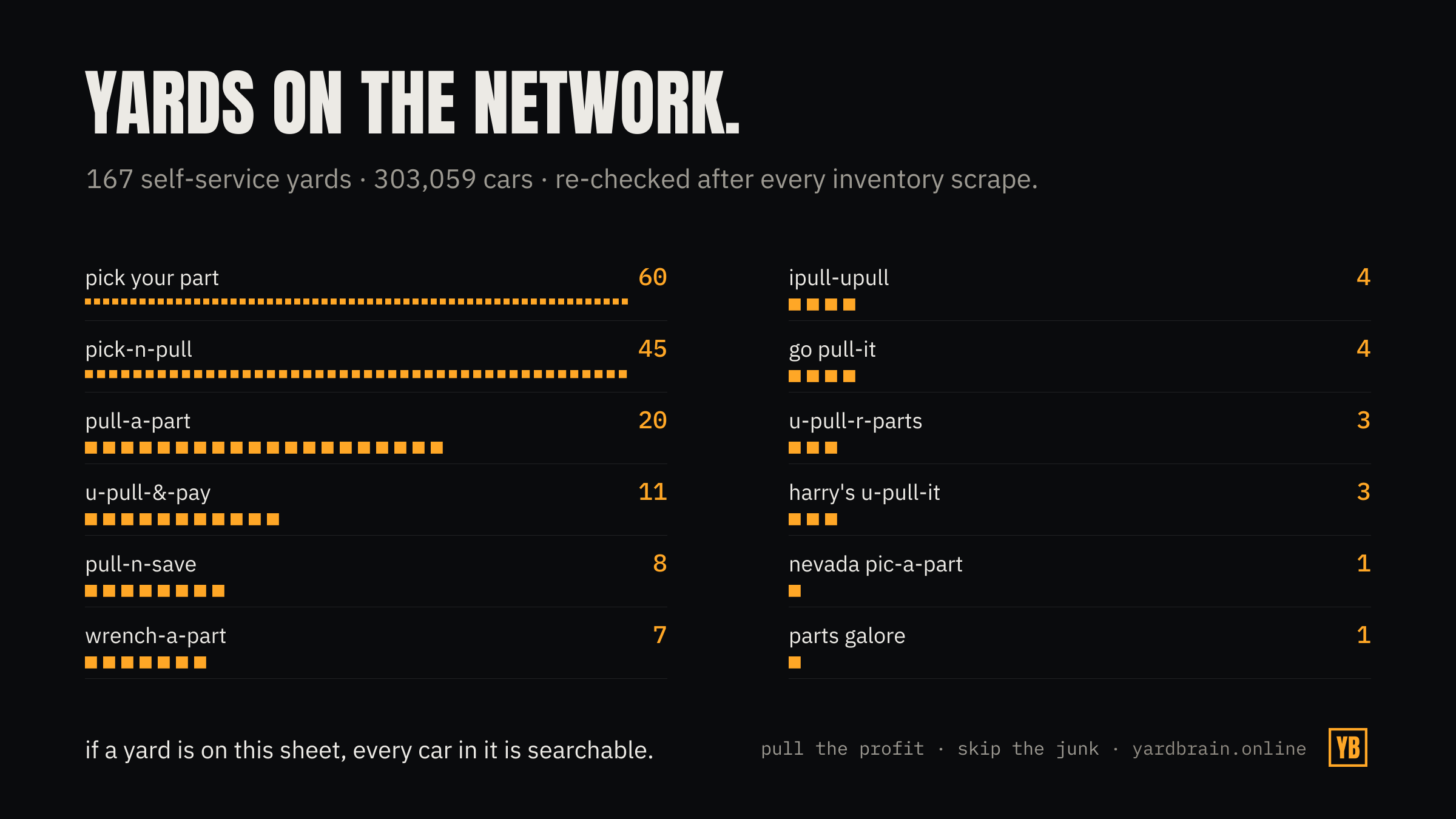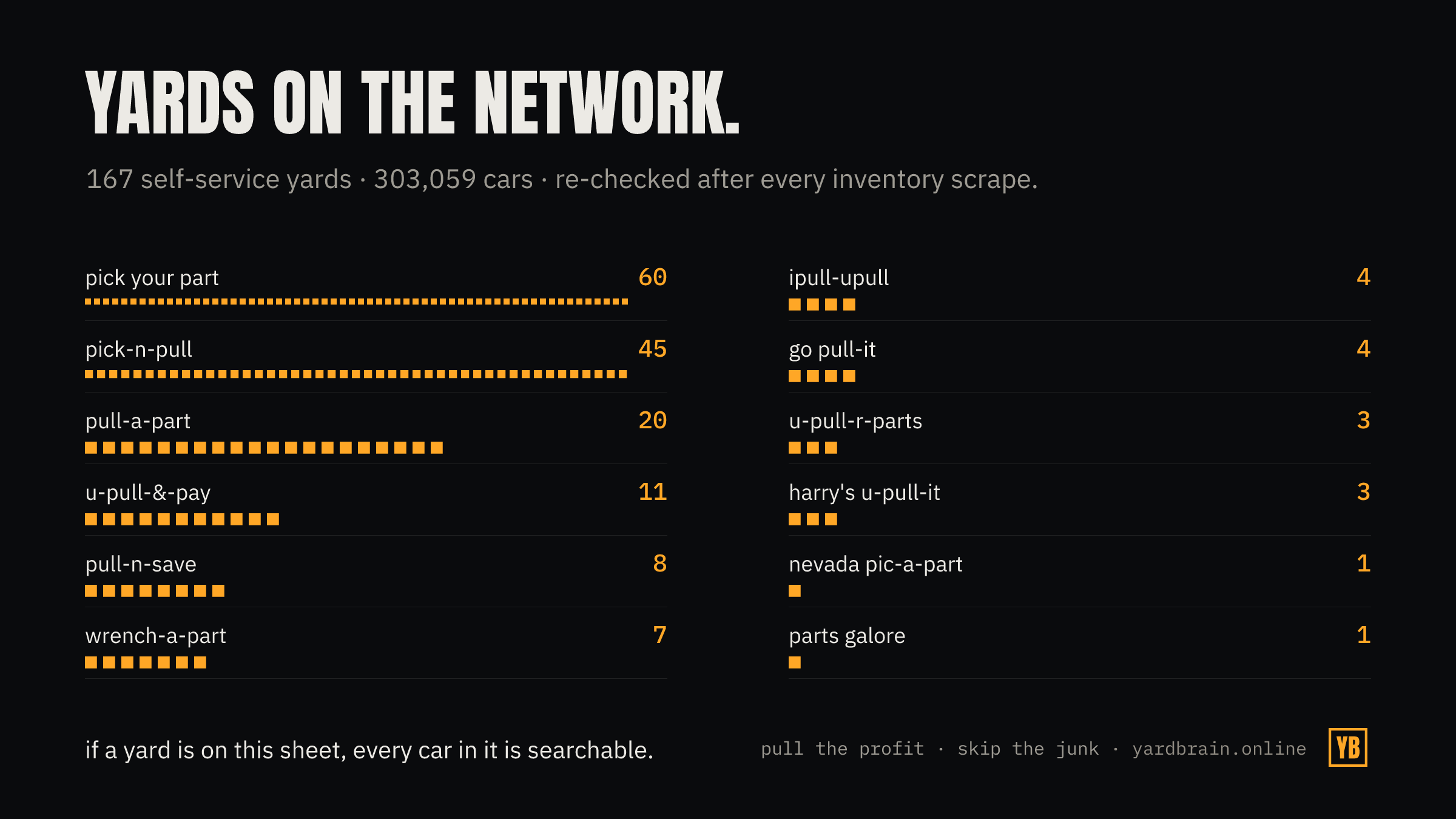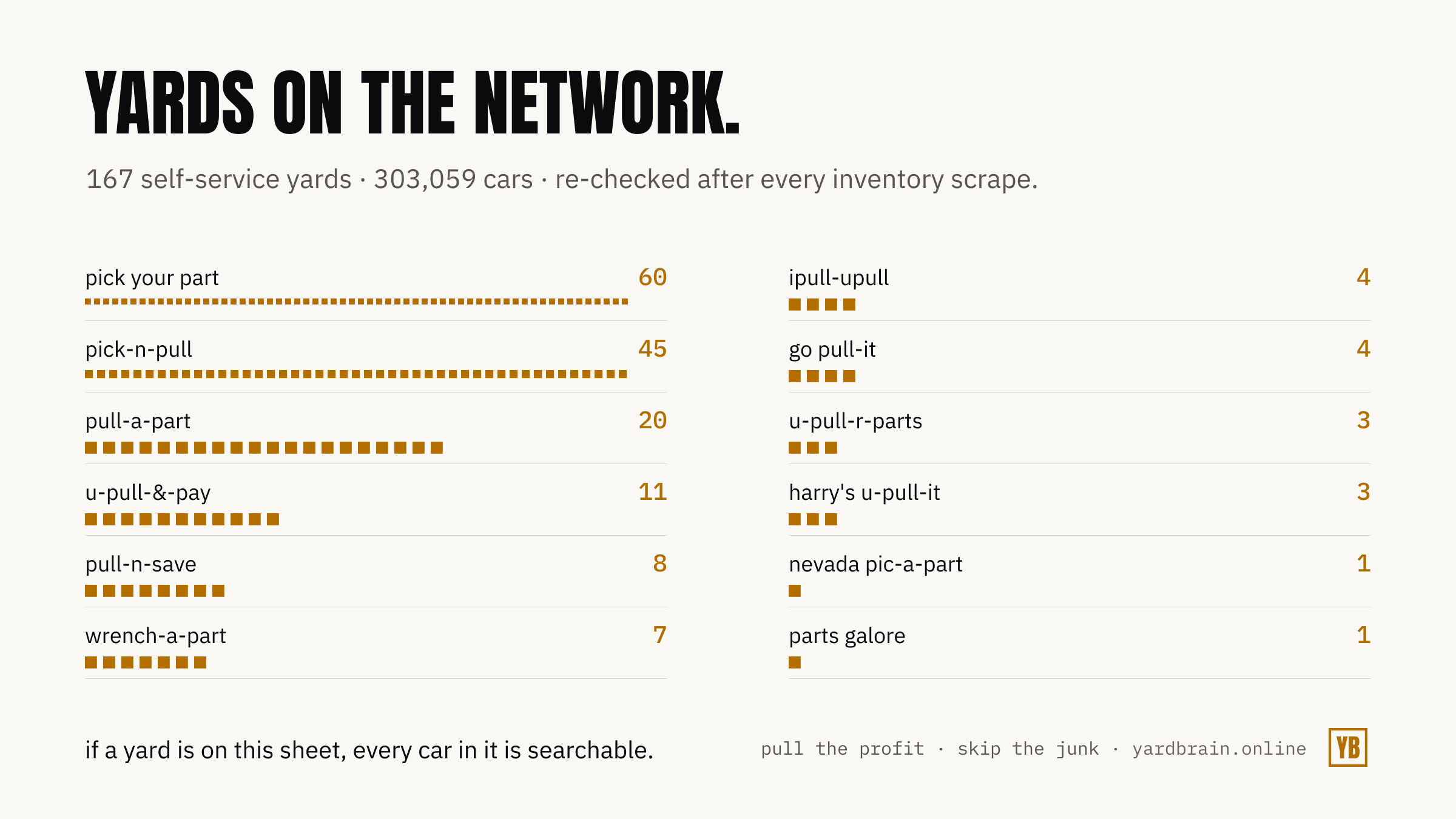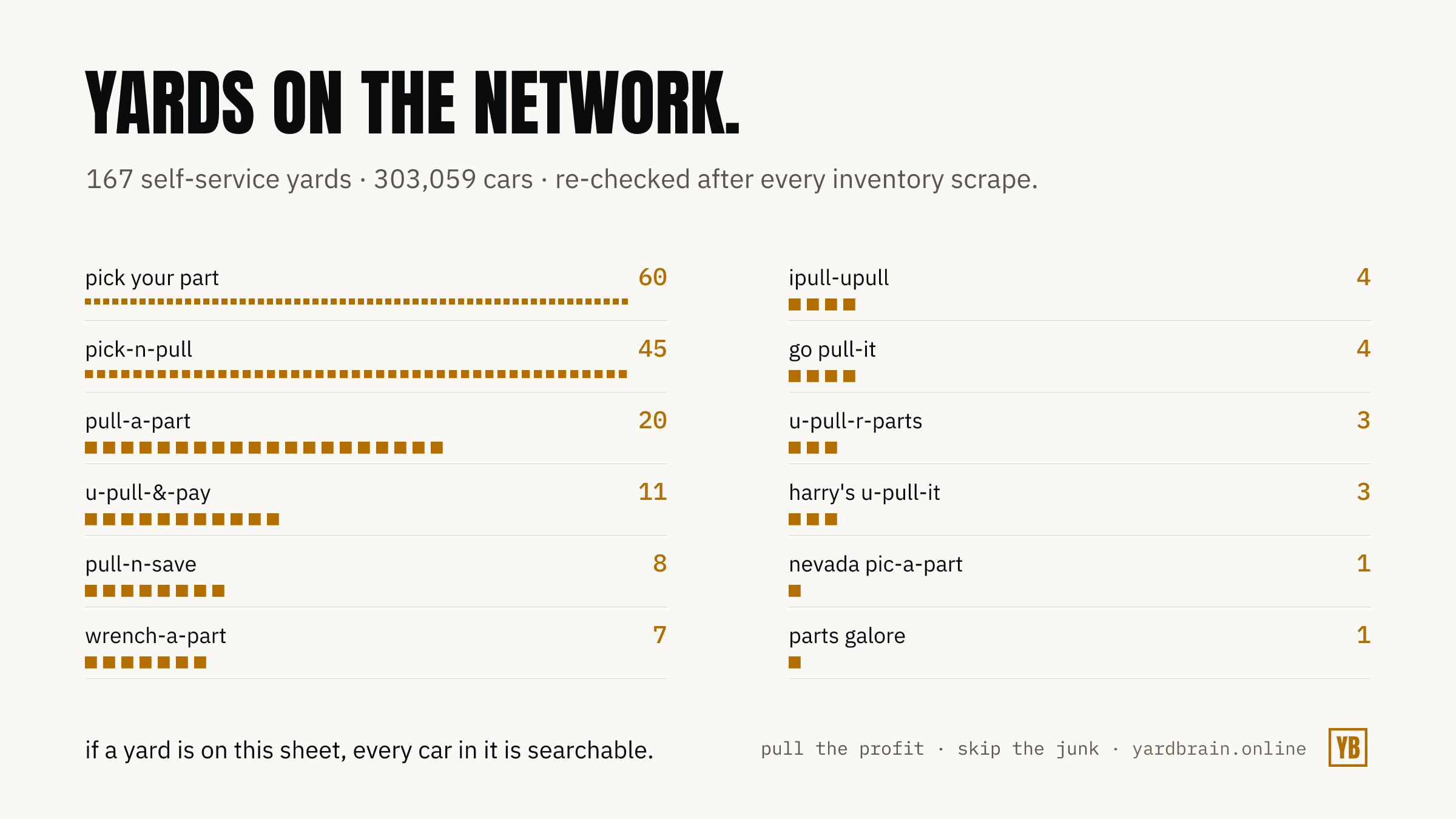
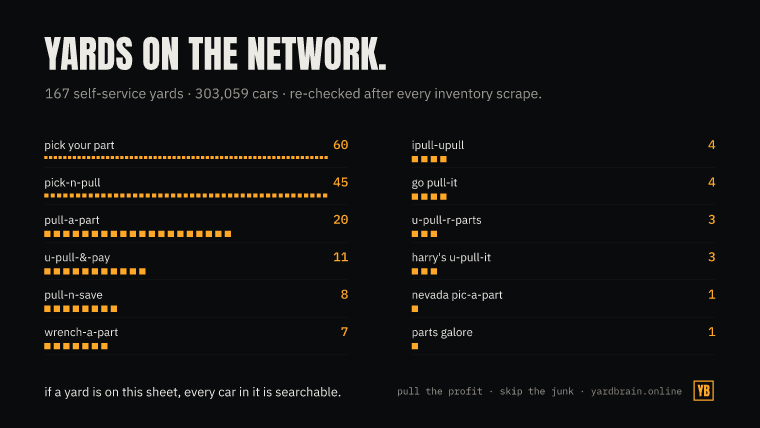
YardBrain is the layer that tells you which. It walks every car in 171 self-service salvage lots, matches each one against a parts catalogue, prices the result against real used-market evidence, and hands back a receipt instead of a hunch.
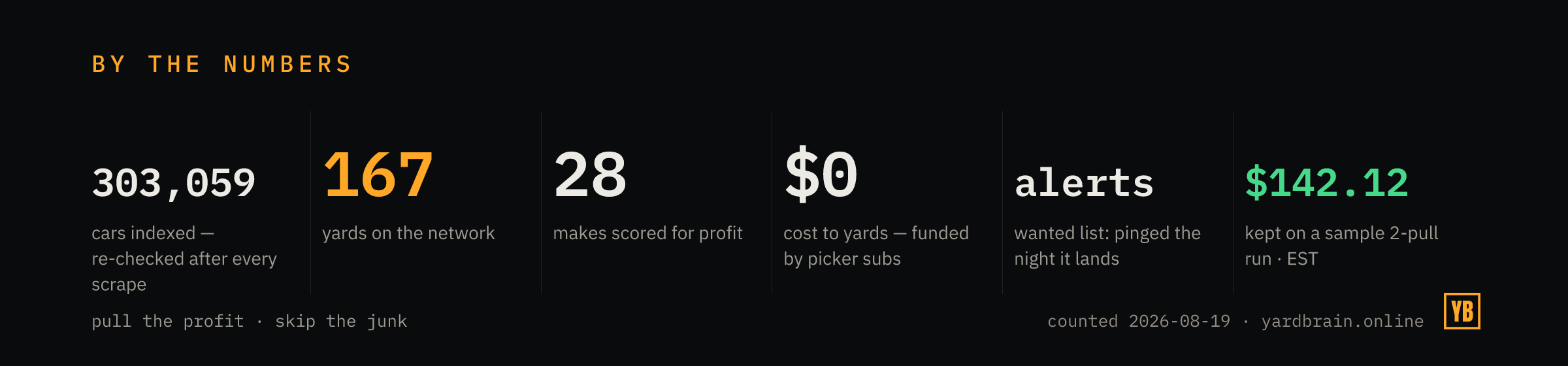
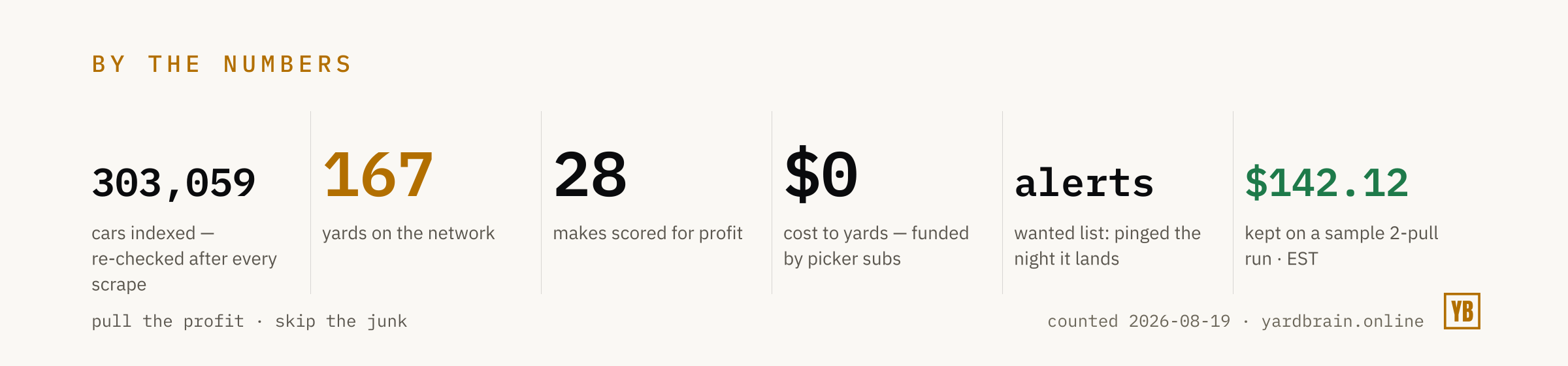
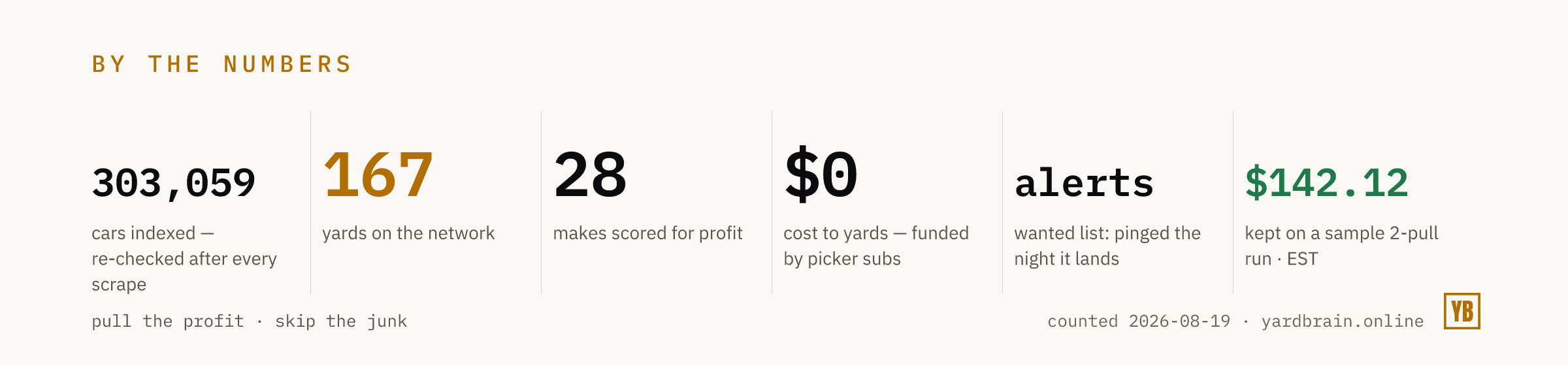
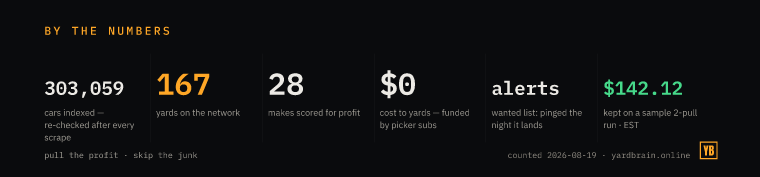
These figures are read from the running app, not typed into this page. They move every night as cars arrive and are crushed — roughly sixteen thousand cars turn over in a week.
The last line is not the four above it subtracted. The cost lines count every part worth pulling; the total counts only the pulls that come out ahead, which is the number a person with a trolley and an afternoon can act on. Measured Oct 3, 2026 09:00 UTC, refreshed hourly.
A self-service yard prices by part type, not by part. A door handle is a door handle: same shelf price whether it is a common one nobody wants or the one variant that is unobtainable new. The information that separates them is real, public and scattered across catalogues, interchange tables and completed sales — and nobody standing in a row of cars on a Saturday has time to assemble it.
The hard part was never finding parts. It was refusing to guess about the ones it could not price.
An early version estimated a part's value as a fraction of its list price. Measured against real research it was wrong in both directions — an ABS modulator estimated at $539 sells for about $55; a headlamp estimated at $205 fetches around $400. Replacing the guess with evidence moved one lot's headline from $10,251 to $4,522. That correction is the product's whole design philosophy, arrived at the expensive way.
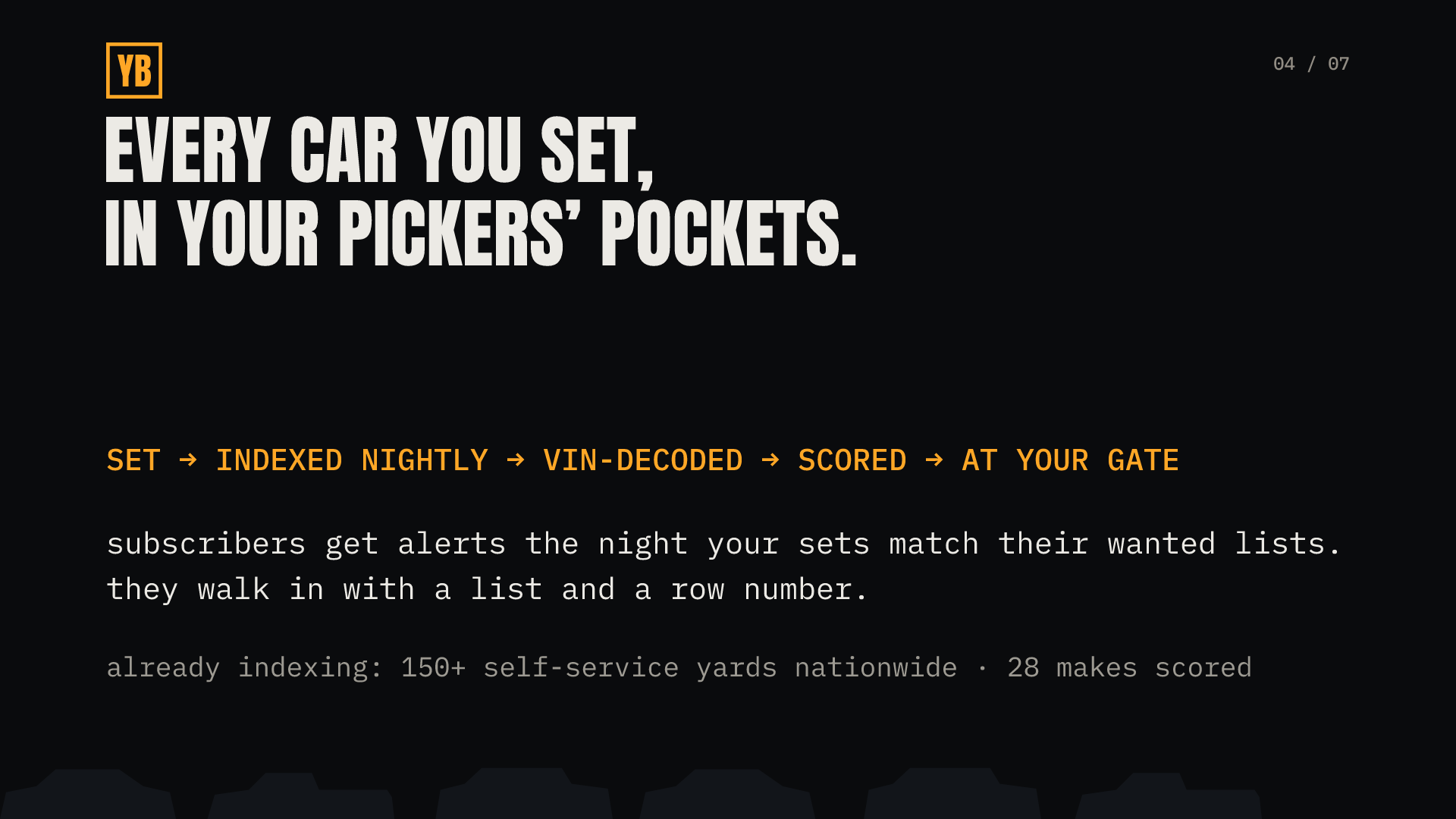
Every yard's live inventory is pulled on a nightly schedule, cars matched to catalogue entries, and cars that have been crushed retired — scoped per yard, so one yard's sweep can never declare another's cars gone.
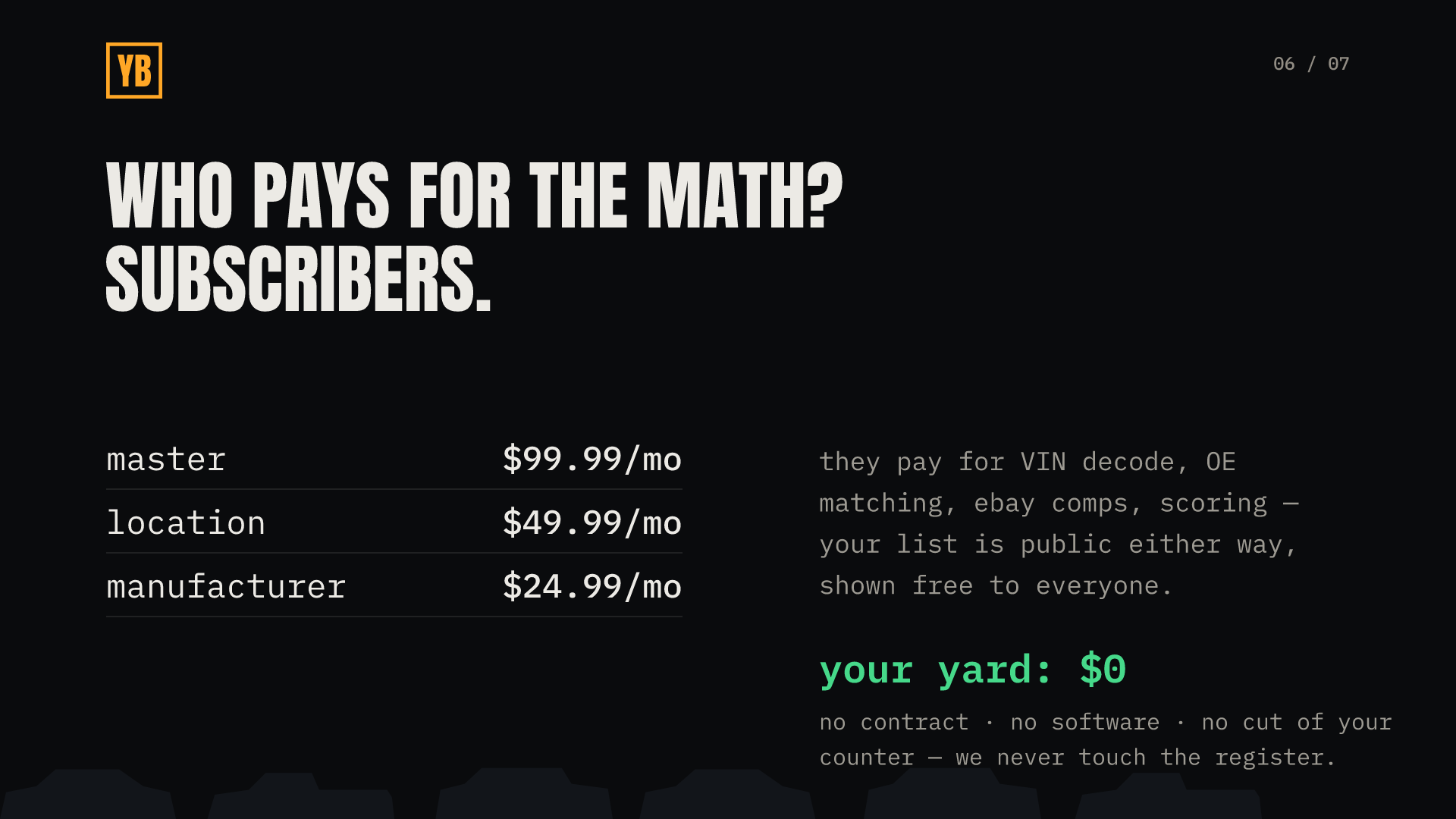
Counter price plus core charge plus that yard's own county tax, against the evidence price for the part, minus the marketplace fee and the shipping it will actually need. Money is never averaged across yards.
Three badges, decided server-side: a researched sold comp, a discounted active asking price, or an arithmetic estimate. An asking price can never be promoted to a sale, however many listings stand behind it.
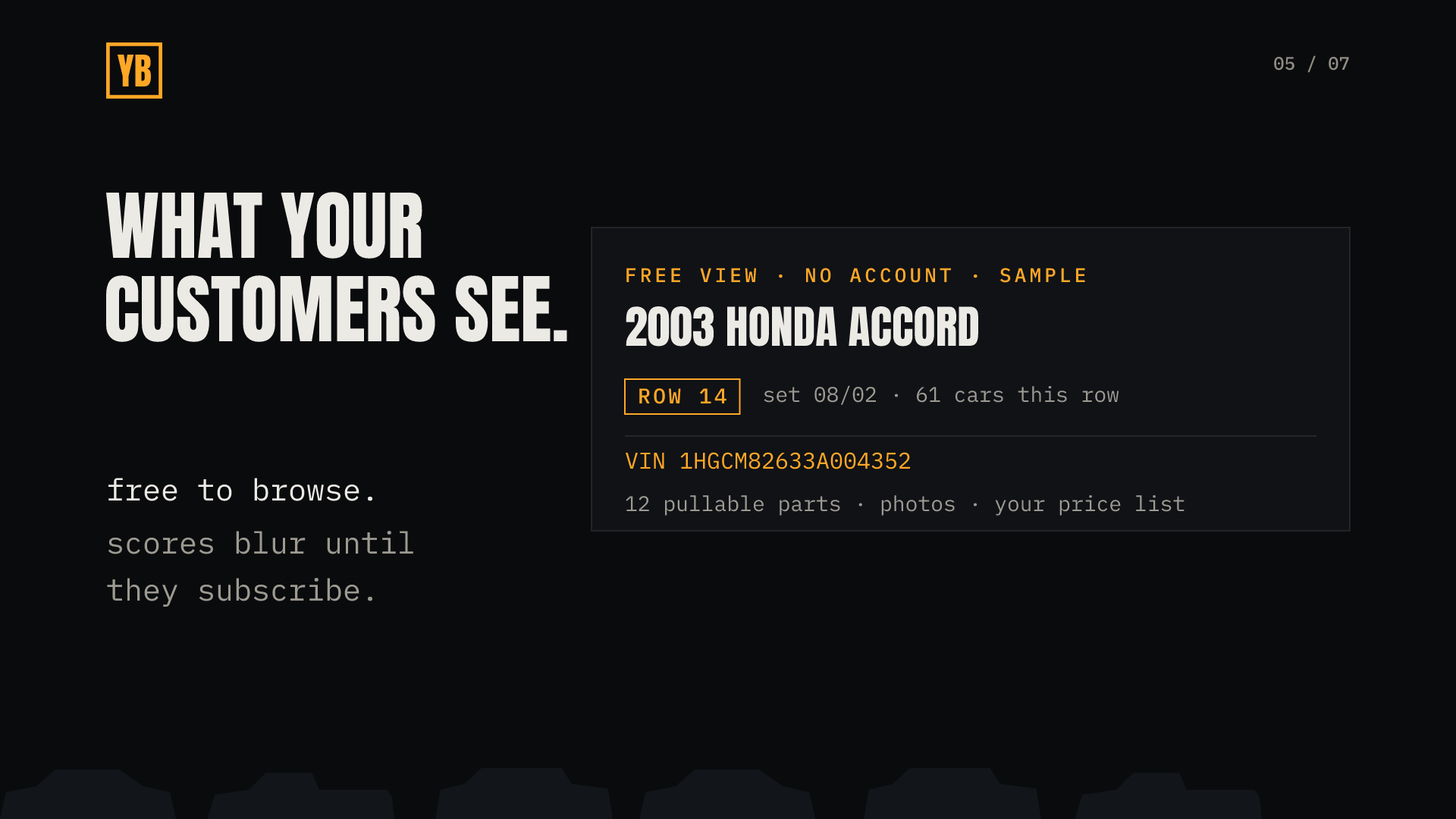
A watchlist that rescans as new cars land, a pull log, a shelf inventory, and a go-bag checklist for the trip itself. Built phone-first, because that is where it is read — standing in the row.
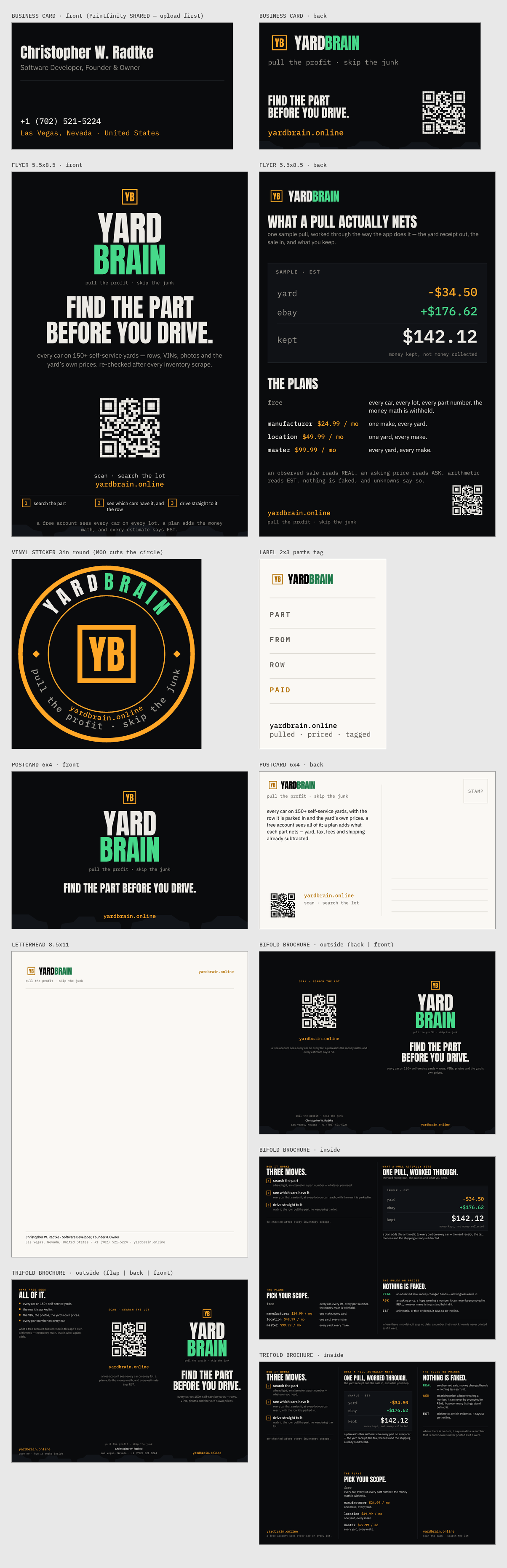
33 pieces · 100 files · 11 MB · built Sep 15, 2026
The YB stamp and wordmark in every lockup, plus one-colour masters for print and the licensed fonts.






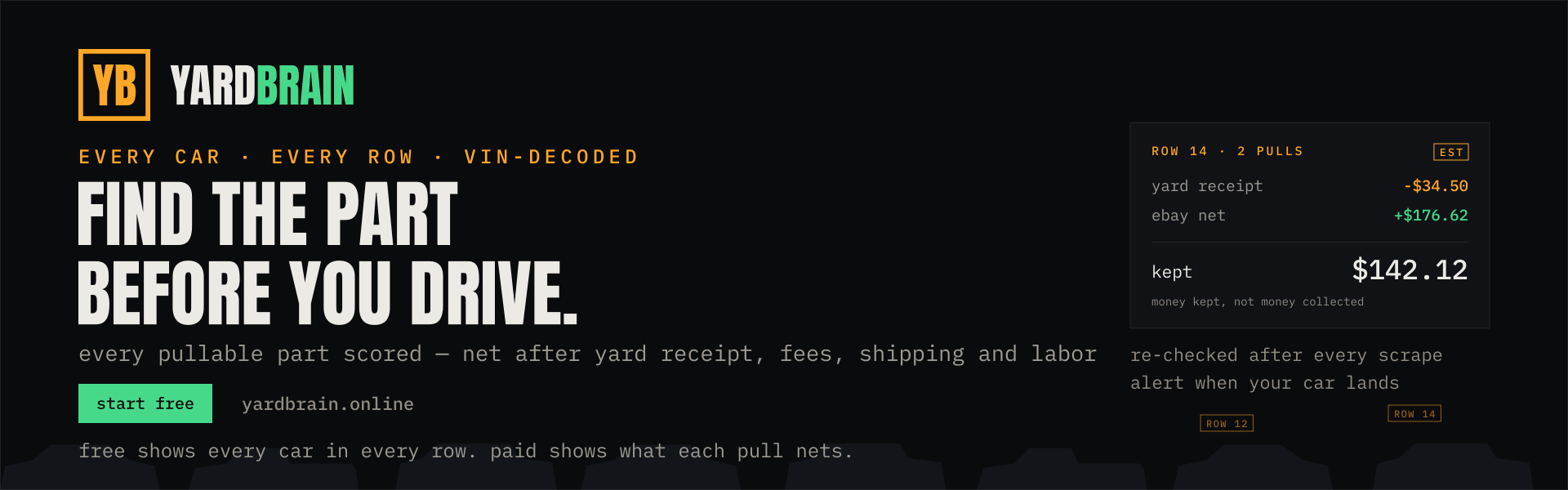
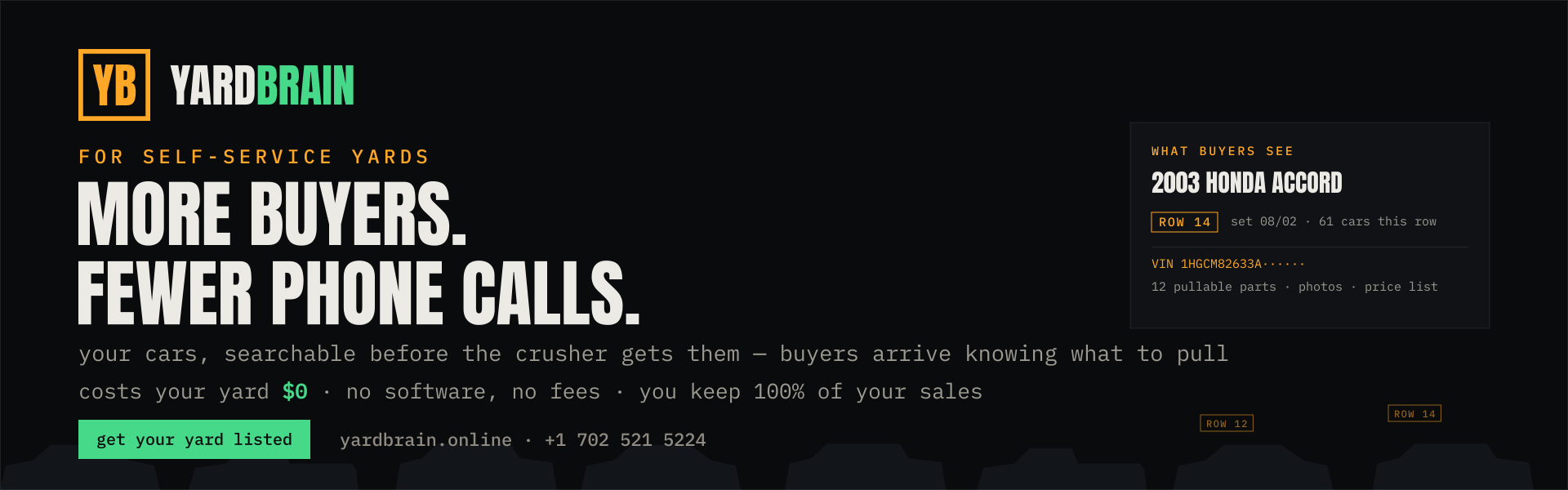
Nine static sizes in two message tracks, plus three self-contained HTML5 animated units.
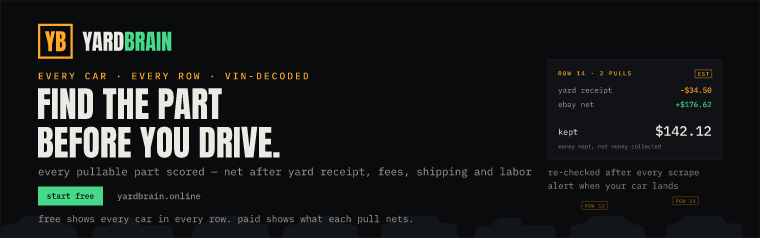
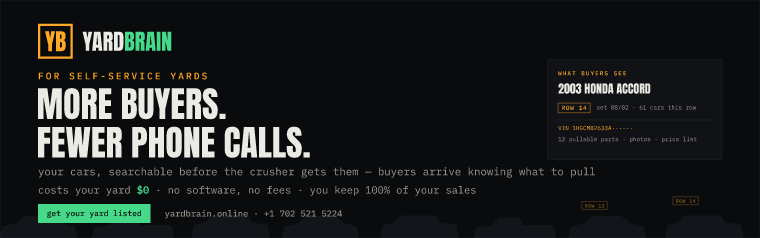


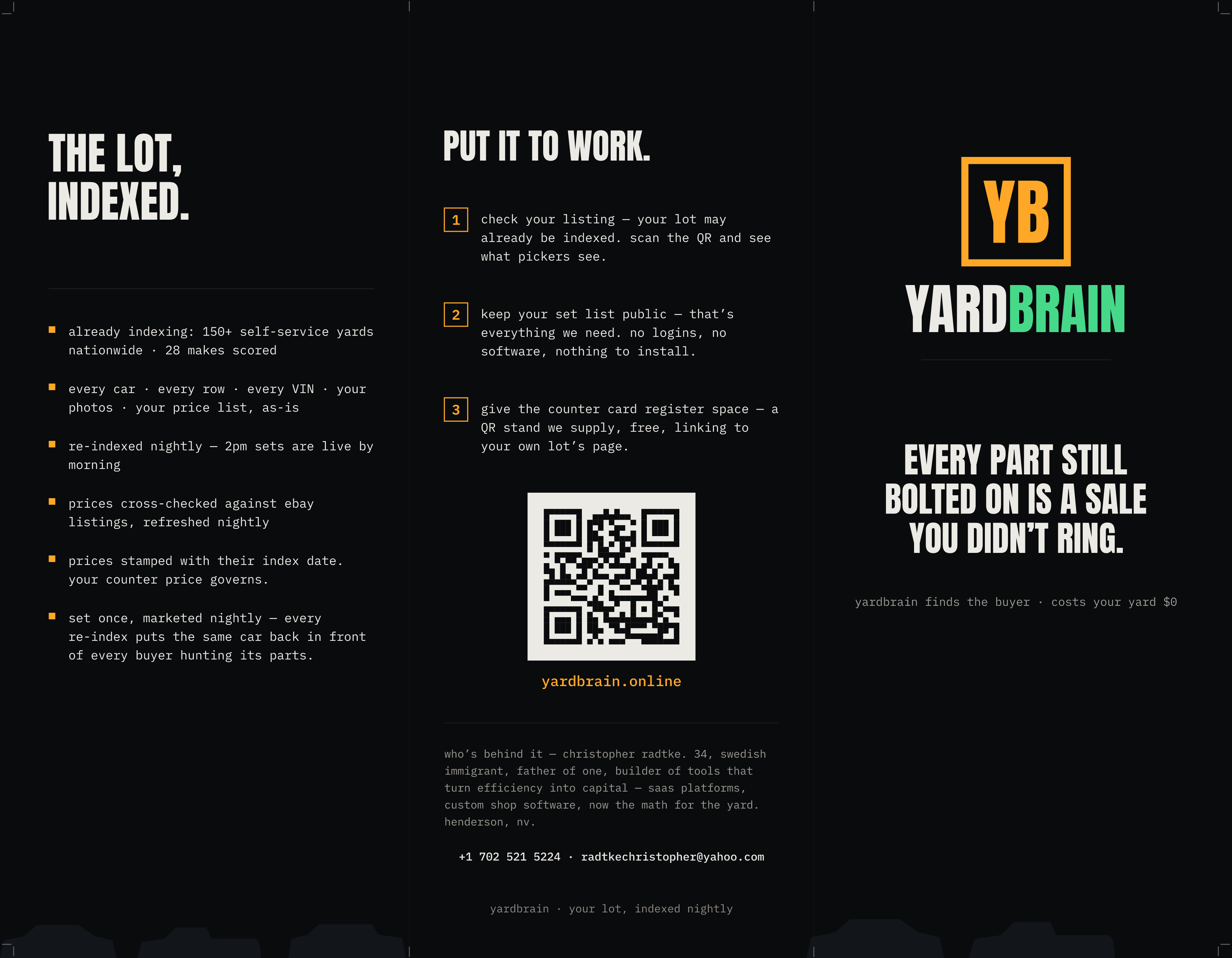
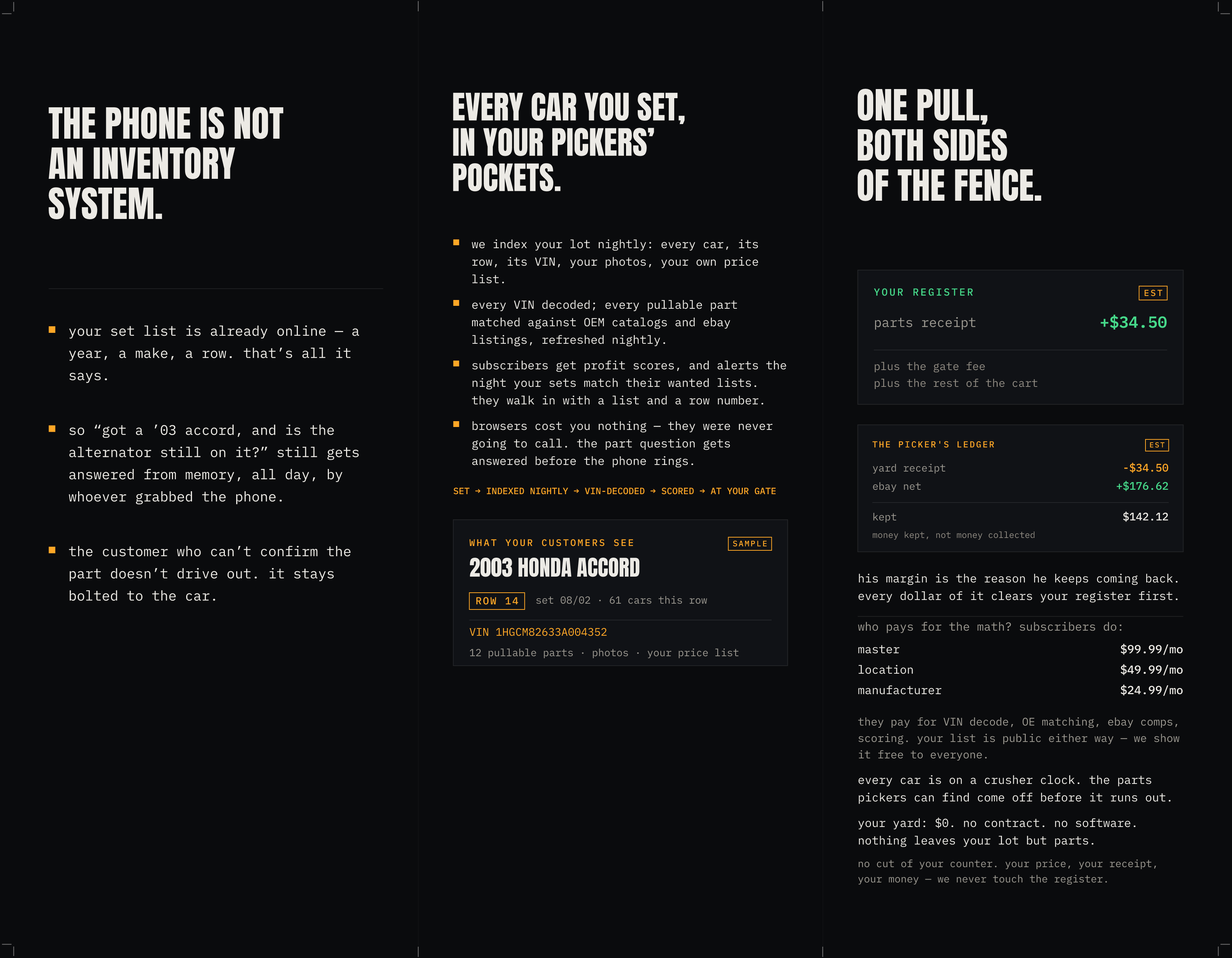
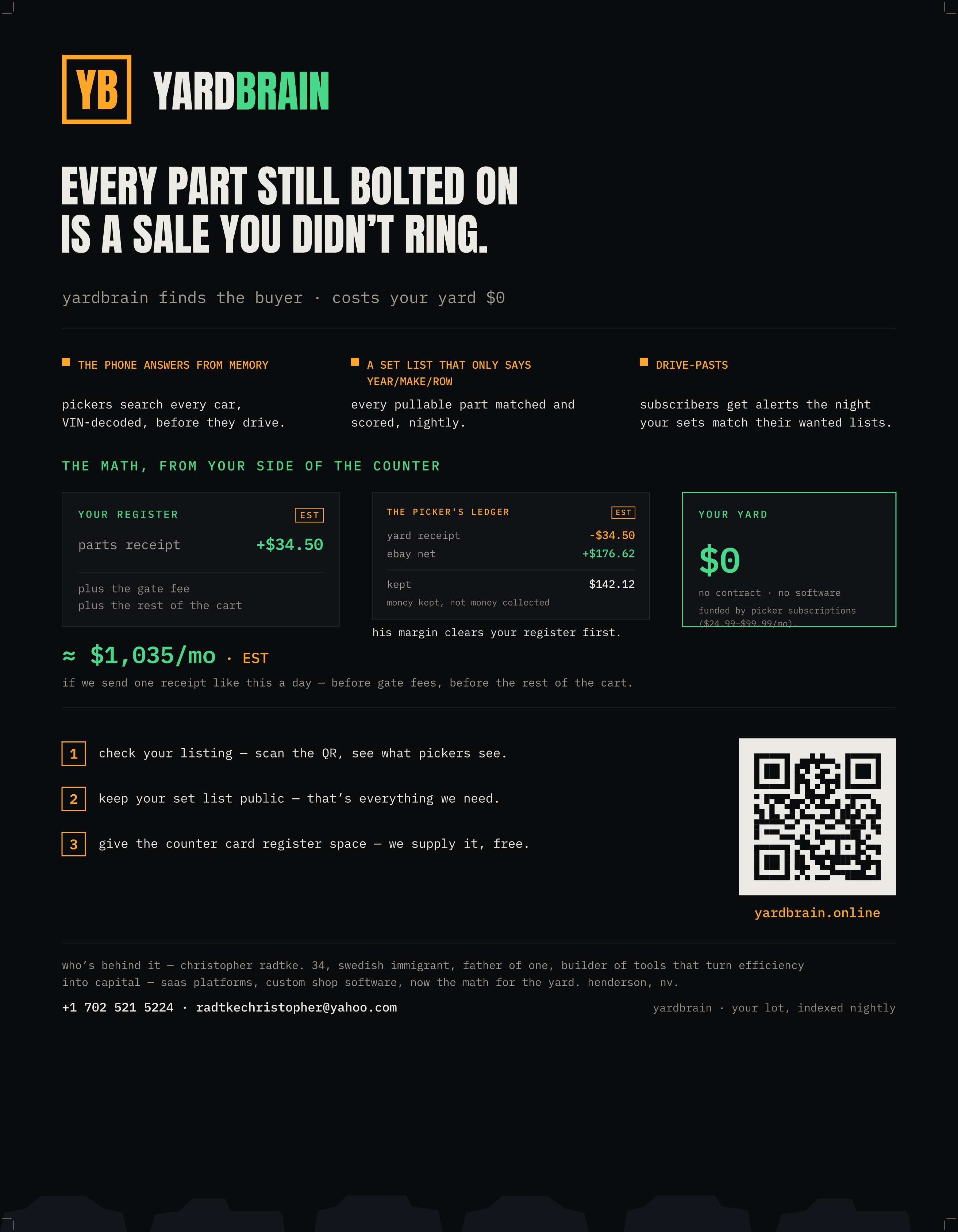
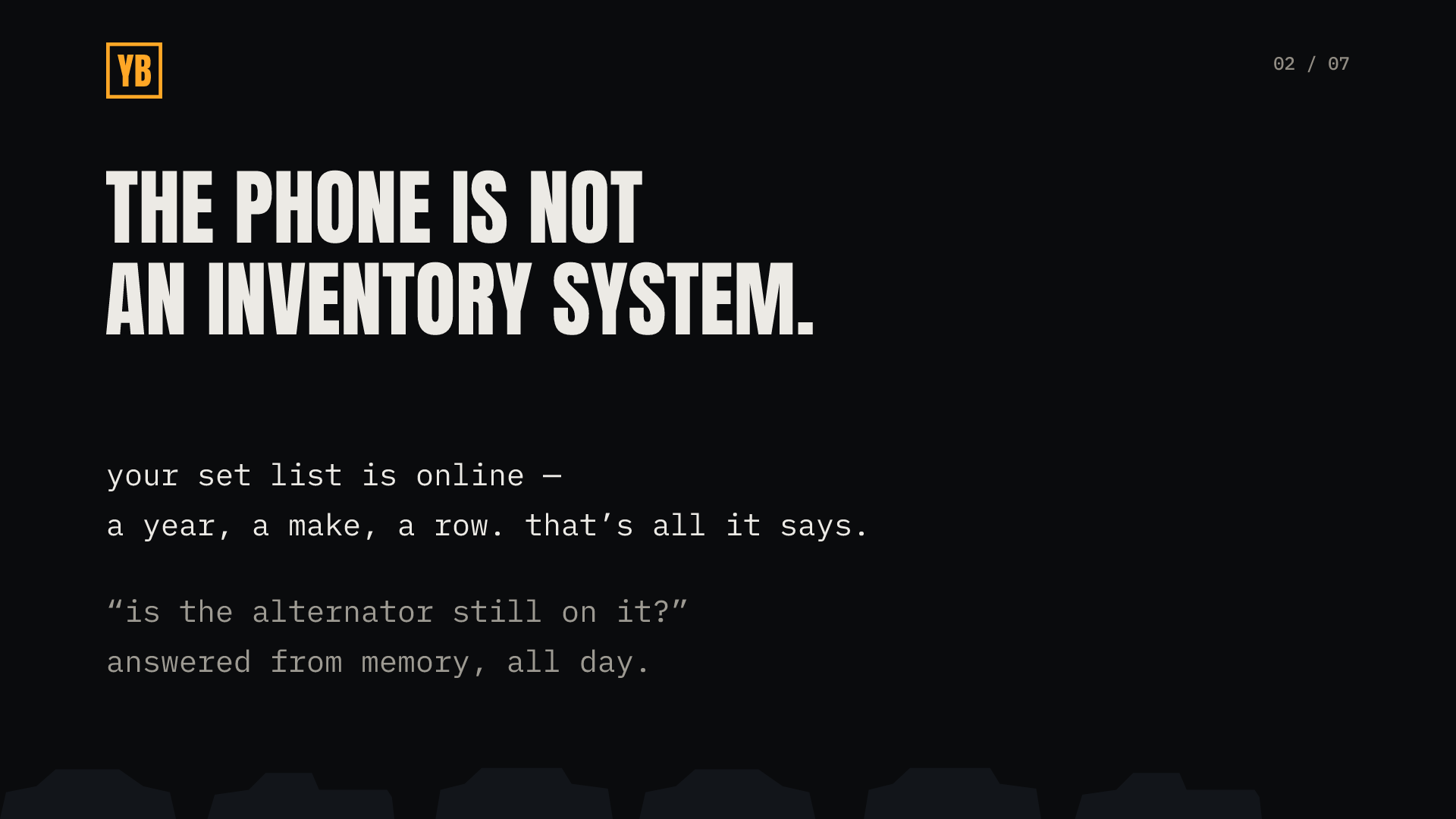
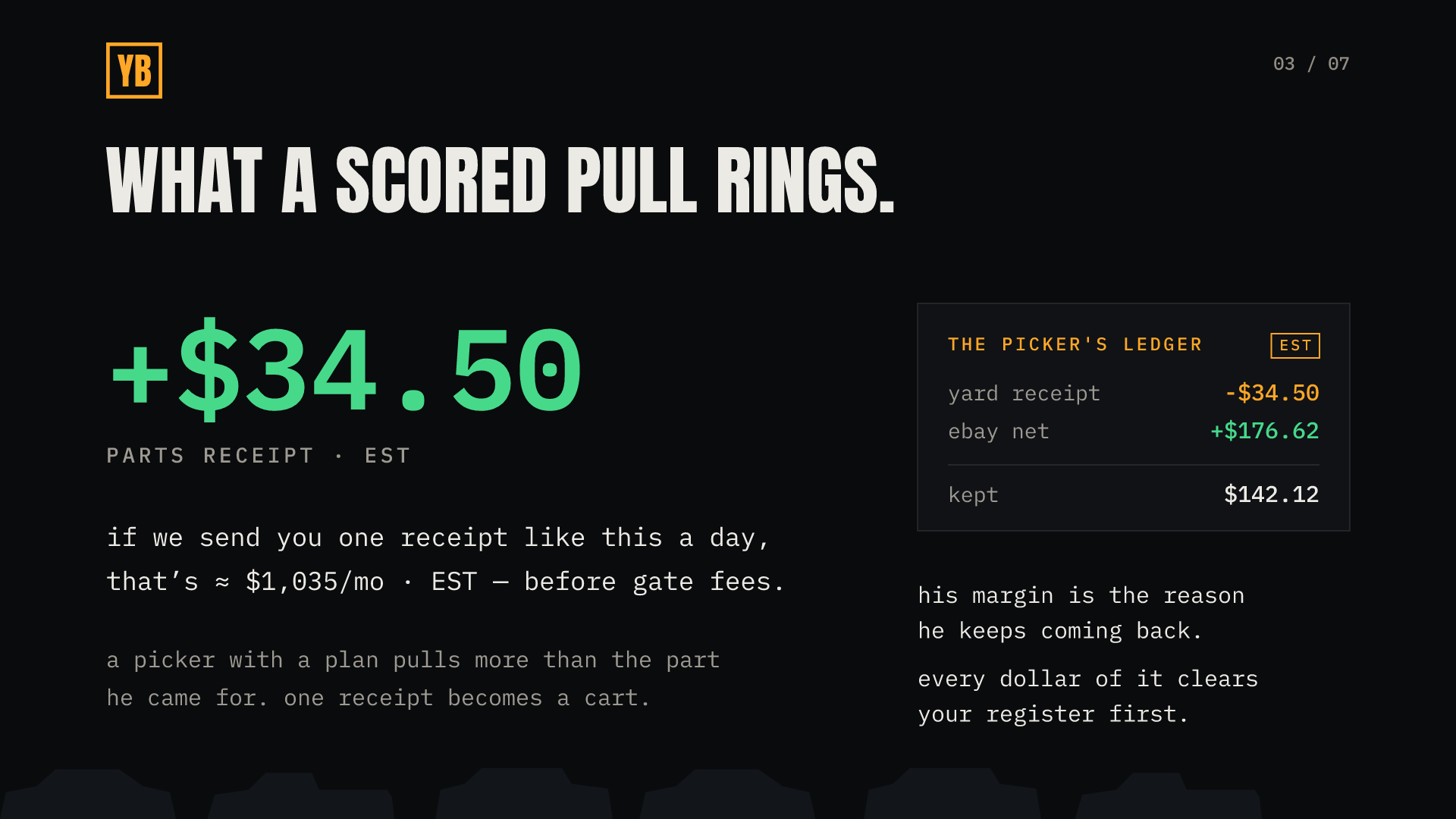
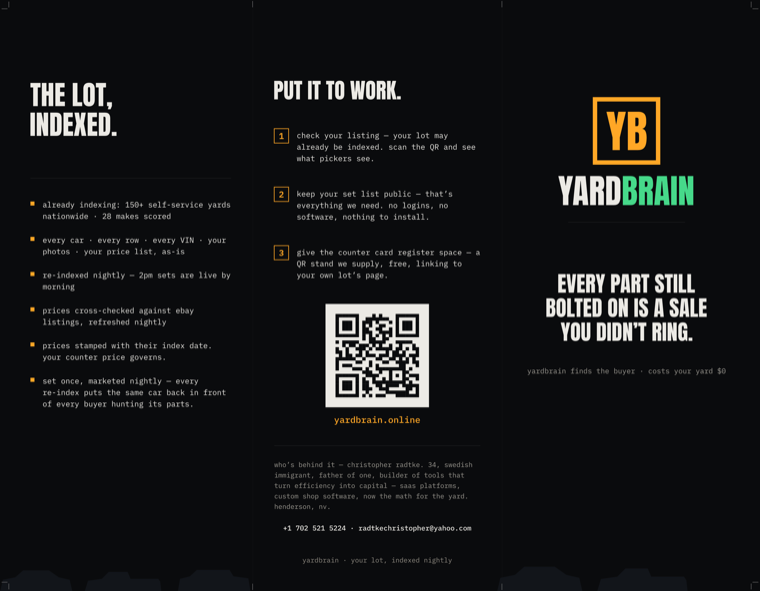
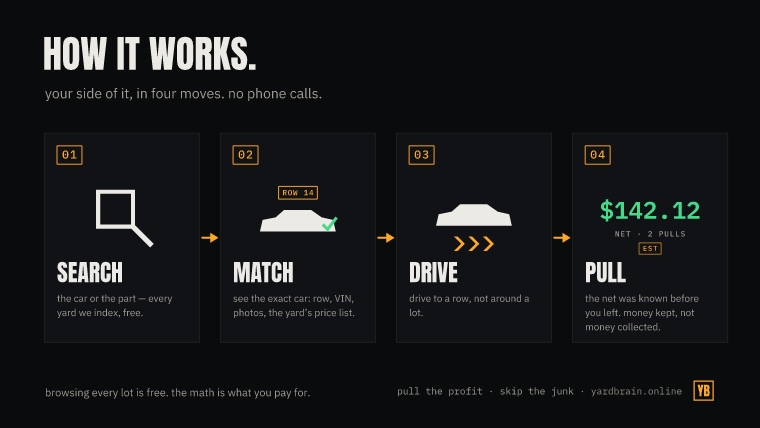
What you hand a yard owner: the tri-fold, the one-page leave-behind, and the seven-slide deck.
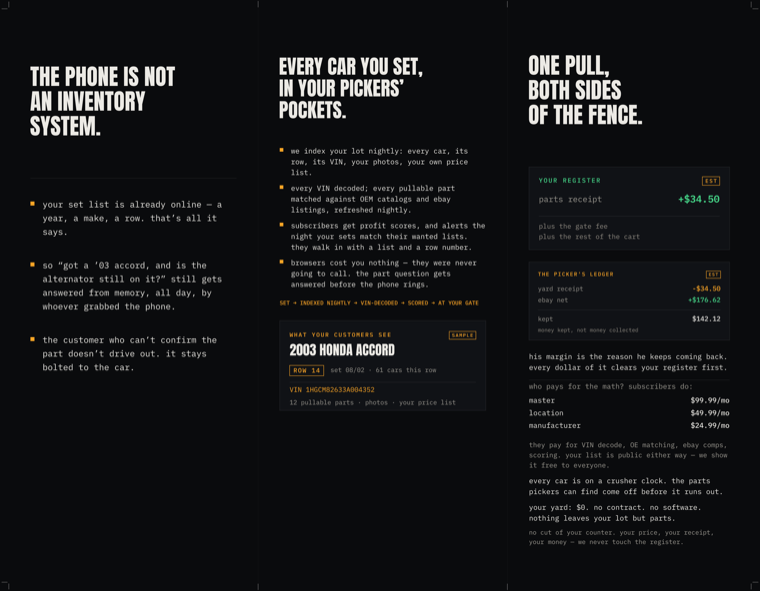
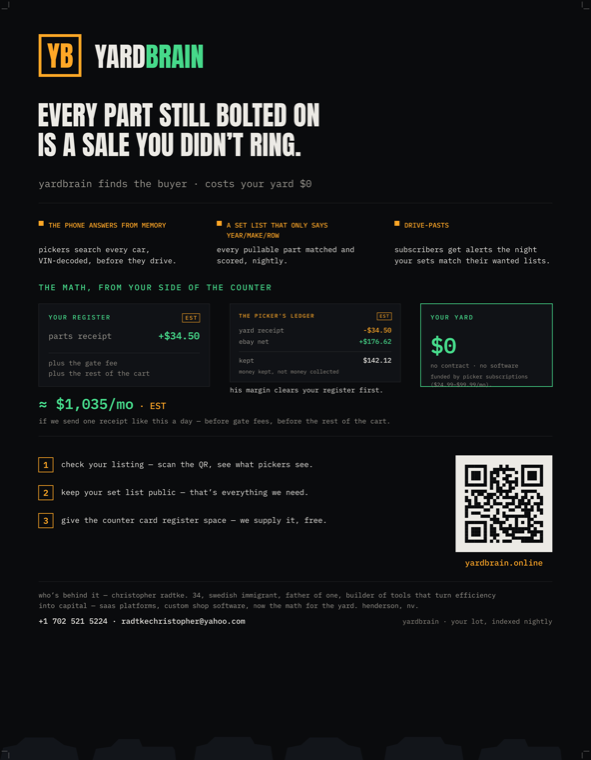
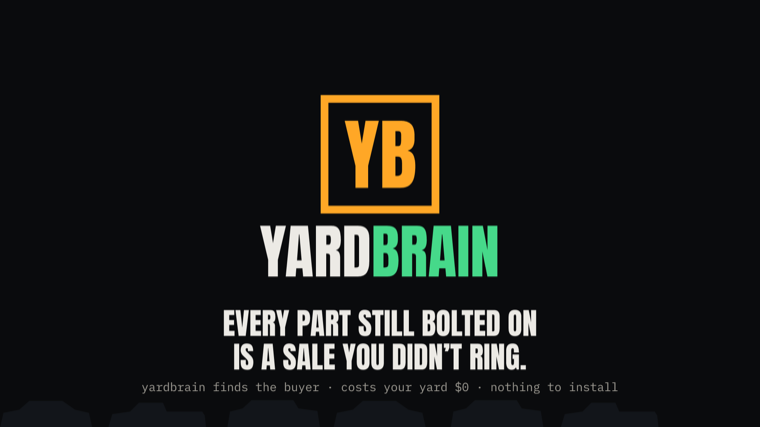
Five standalone pieces, each in dark and a photocopy-safe light version.



Live and in daily use, with its own accounts, its own iOS companion, and an overnight schedule that keeps every lot current. The pricing internals, per-yard price boards and cost model stay private — they are the product.
Visit YardBrain